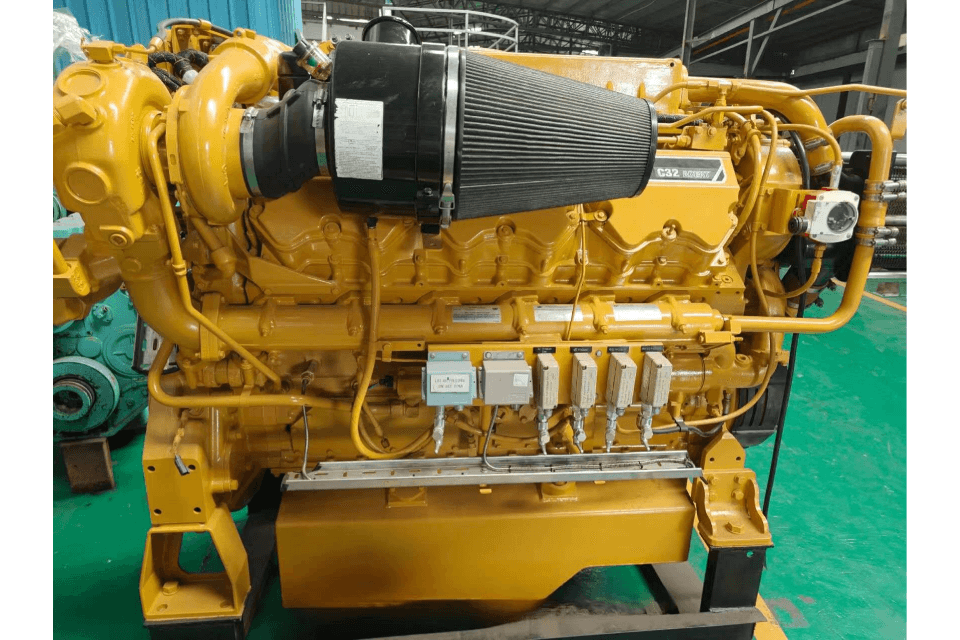
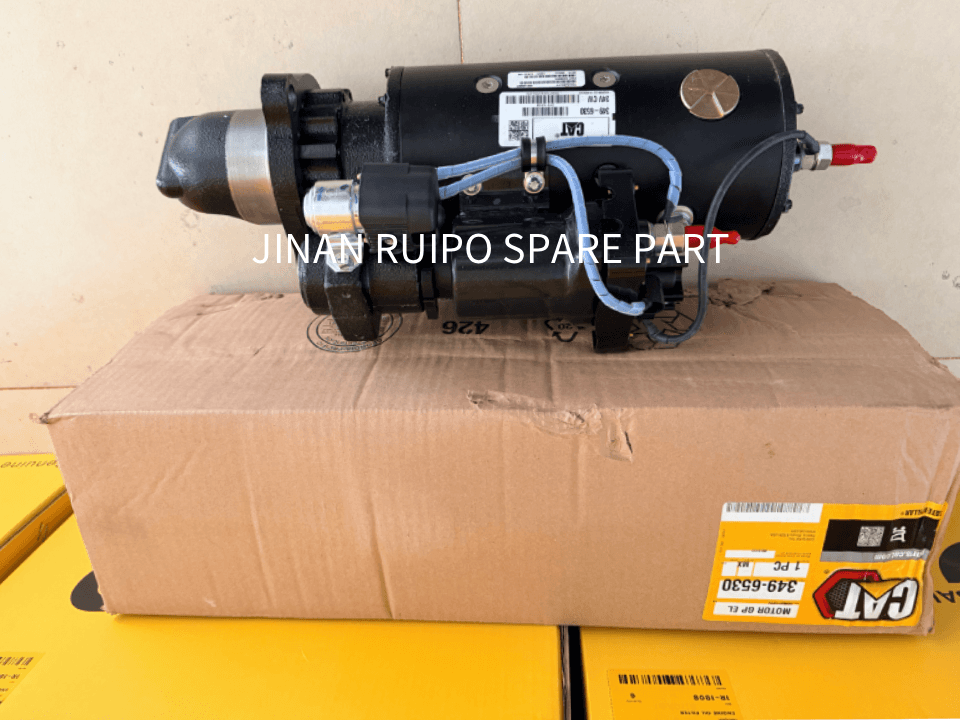
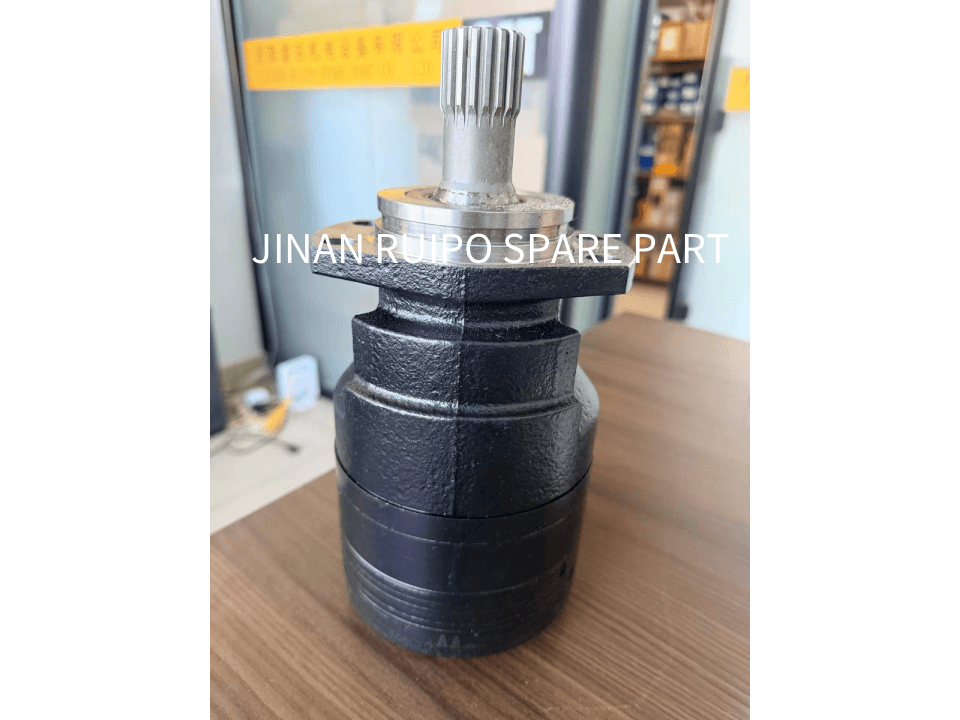
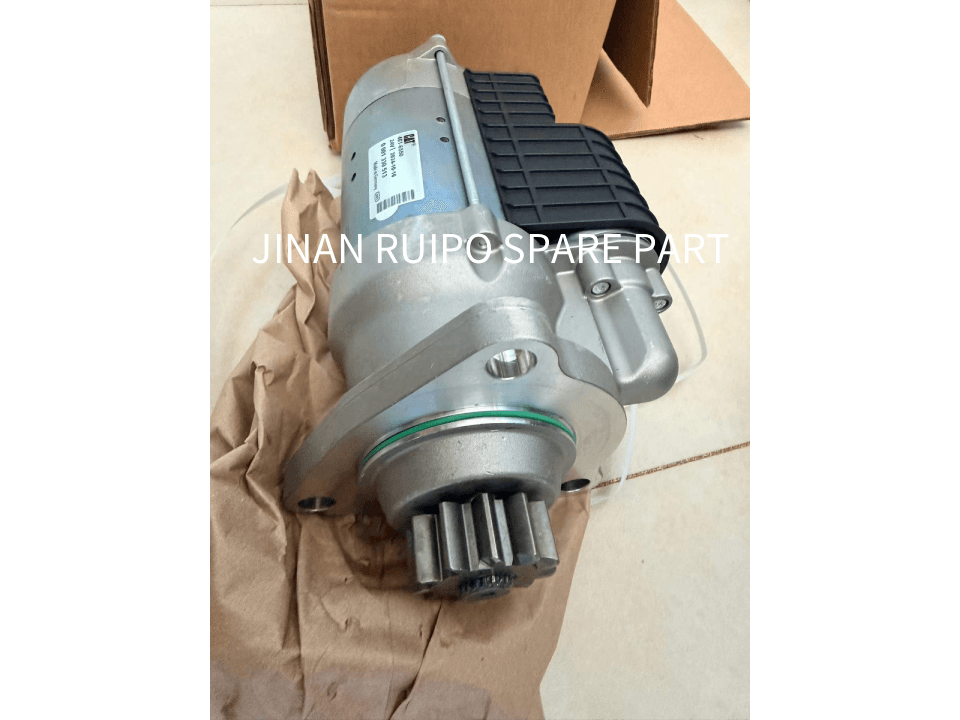
“The supplier gave us a true one-stop parts solution. Their team matched the right Caterpillar, Perkins, and filter parts for our equipment, and the support stayed fast and professional from inquiry to delivery.”
Procurement Manager
Heavy Equipment Parts Projects
WHAT oTHERs SAY about us
“The supplier gave us a true one-stop parts solution. Their team matched the right Caterpillar, Perkins, and filter parts for our equipment, and the support stayed fast and professional from inquiry to delivery.”
How Maintenance Quality Changes Diesel Engine Service Life by Thousands of Hours
’ve never liked the sentence “the engine failed suddenly.”
Usually, it didn’t.
From my experience, the failure started much earlier—when somebody ignored a restriction indicator, topped up coolant with whatever water was available, kept using a dirty transfer drum, ran a cold engine under heavy load, or signed a service sheet without checking what actually came out of the sump.
The engine was giving warnings. Nobody wanted the bill.
A Caterpillar 3500, Cummins QSK60, Perkins 1106, Volvo Penta TAD1242GE, or John Deere industrial engine can run for a very long time, but the badge on the valve cover does not protect it from dust, water, soot, heat, or bad decisions.
That’s the part many buyers don’t want to hear.
Maintenance quality is not a clerical issue. It decides how fast the engine wears, how early the turbocharger starts leaking, how often injectors fail, and whether an overhaul arrives at 12,000 hours or several thousand hours later.
So, what actually changes the clock?
Diesel Engine Service Life Is Not a Fixed Number
Diesel engine service life is the period an engine remains capable of doing useful, economical work before an overhaul, replacement, or major repair becomes the sensible choice.
It is not a number permanently stamped into the block.
A standby generator carrying a steady 70% load is not living the same life as a quarry excavator breathing mineral dust, a mining truck operating in long haul cycles, or a marine engine dealing with salt air and irregular loading. Same fuel. Different punishment.
The U.S. Environmental Protection Agency’s technical material on large stationary diesel engines connects proper engine maintenance with controlling blue-smoke emissions. In the workshop, blue smoke is usually treated as a clue—oil-control trouble, ring wear, turbocharger leakage, or poor combustion—not just an emissions statistic.
And here’s an important distinction: “serviced on time” does not mean “maintained well.” It tells me the date. It doesn’t tell me the oil specification, the fuel condition, the filter seal, the coolant chemistry, or whether the operator kept running after the temperature alarm.
The five variables that shorten or extend engine life
Maintenance variable
What it controls
Damage when neglected
Common late symptom
Air filtration
Dust and abrasive-particle entry
Ring, liner, turbocharger, and compressor-wheel wear
Blow-by, oil consumption, low compression
Fuel filtration
Water and solid contamination
Injector, pump, and common-rail wear
Hard starting, low power, fault codes
Oil-change quality
Lubrication film, soot, wear metals, viscosity
Bearing, camshaft, turbocharger, and piston damage
These items overlap. A leaking intake lets dust in. Dust raises wear metals. Wear metals pollute the oil. Contaminated oil damages bearings. Then everyone calls it a “bearing problem.”
It was an intake problem first.
Air Filtration: Dusting Can Begin Without Any Drama
A filter can look fine and still be letting the engine down.
I’ve seen air filters that were visibly dirty but doing their job properly. I’ve also seen clean-looking elements with torn pleats, crushed radial seals, damaged end caps, or a warped housing. The second type is worse because the engine keeps working while unfiltered air moves straight toward the turbocharger and cylinders.
Silica dust is particularly nasty. Mixed with the oil film, it behaves like grinding paste. It doesn’t need to destroy the engine in one shift. It only has to keep entering for several thousand hours.
Check the whole intake path:
Restriction indicator and dust-unloader condition
Filter media, end caps, and radial seals
Air-cleaner housing distortion
Intake hose cracks and clamp security
Dust found downstream of the filter
Turbocharger compressor-wheel erosion
Rising oil consumption or blow-by
A U.S. Department of Energy operating document lists daily checks for oil level, coolant level, the fuel-water separator, air-cleaner dust unloader, and restriction gauge. That diesel-engine maintenance checklist is practical because it treats the intake, fuel, oil, and cooling systems as one protection chain.
One more thing: don’t let somebody attack a filter with excessive compressed air just to avoid buying a new element. Filter media damage is often invisible from the outside.
Diesel Fuel Filtration Protects Tiny Parts With Big Price Tags
Modern fuel systems have very little tolerance for dirt and water.
Water reduces lubricity and encourages corrosion. Fine particles damage the close-fitting surfaces inside pumps and injectors. Rust from a storage tank can travel through the system long before anybody notices a change in engine sound.
The filter is not the whole fuel strategy.
Tank cleanliness matters. Transfer hoses matter. Drum storage matters. Water separation matters. Refuelling discipline matters. A dirty fuel source can defeat a perfectly good new filter.
California’s January 2022 Heavy-Duty Diesel Engine Warranty Cost Study gives a useful reality check. In one heavy-heavy-duty vehicle data table, turbochargers showed a 9.8% warranty-claim rate with an average repair cost of $5,100; EGR coolers showed 9.6% at $3,100; fuel injectors showed 6.0% at $2,208. These figures are not a promise that every fleet will see the same rates, but they show how quickly “small” maintenance decisions can lead to expensive components.
When injectors fail again and again, I don’t want to hear only, “We need new injectors.” I want the tank sampled, the separator inspected, the transfer equipment checked, and the fuel source questioned.
Otherwise, the new injector is going back into the same dirty environment.
For high-pressure fuel work, application accuracy matters. A Caterpillar genuine common-rail fuel-injection pump must be matched by engine model, serial number, fuel-system arrangement, and installation procedure.
Small fittings matter too. A wrong thread or a poor seal can create air ingress, fuel leakage, vibration trouble, and repeated priming issues. The CAT C4.4 fuel-priming-pump elbow is not the largest line on a quotation, but the wrong one can still stop the job.
Oil Change Quality: The Interval Alone Means Very Little
“Oil changed every 500 hours.”
Okay. Which oil?
Was the viscosity right? Was it approved for the engine and after-treatment system? Was the sump drained warm? Was the new oil stored in a sealed, clean container? Was fuel dilution checked? Was the filter installed without dragging dirt across the gasket?
That is where real maintenance separates from box-ticking.
The U.S. Department of Energy describes diesel-engine oil and filter service intervals across a broad range of 350 to 700 operating hours, depending on engine and application, in its combined-heat-and-power guide. Don’t copy that range blindly. It shows why manufacturer instructions, workload, oil condition, and contamination exposure must be considered together.
Useful oil-analysis data includes:
Iron and copper
Aluminum and chromium
Silicon from dirt
Soot loading
Fuel dilution
Viscosity
Total base number
Glycol or coolant contamination
Water content
I would rather review an oil trend than listen to someone say, “It sounds normal.” An engine can sound perfectly healthy while fuel dilution weakens the oil film and silicon climbs inside the sump.
The ugly part arrives later.
Cooling-System Care: Heat Does Not Forgive
Cooling systems are usually ignored because they don’t make much noise.
People check the oil. They look at fuel. They remember coolant after the gauge moves into the wrong zone.
Ethylene glycol—C₂H₆O₂—is only one part of coolant protection. A healthy system also needs the correct coolant family, suitable concentration, stable pH, controlled additive levels, clean radiator or heat-exchanger surfaces, a working pressure cap, and hoses that aren’t slowly leaking.
A 50/50 antifreeze-and-water mixture may be common, but the mixture alone doesn’t prove suitability for a CAT, Cummins, Perkins, or Volvo Penta engine. The engine manufacturer’s coolant specification still wins.
OSHA’s winter-weather equipment guidance recommends checking engine systems and maintaining the correct antifreeze-and-water mixture. For heavy equipment fleets, that is the starting point—not the entire coolant program.
Repeated overheating is worse than one obvious overheating event. Thermal cycling can fatigue cylinder heads, liners, gaskets, seals, aftercooler circuits, and exhaust components.
One hot shutdown may be survivable.
A pattern is not.
Operator Habits Can Undo Expensive Parts
Operators shape engine wear every shift.
Long idling can create wet stacking and soot problems. Heavy loading before warm-up stresses the oil film and piston assembly. An immediate shutdown after sustained load leaves the turbocharger heat-soaked. Ignored alarms turn a manageable issue into a recovery job.
But fleets often describe this as a “training problem,” then send the operator to a twenty-minute toolbox talk and move on. I frankly believe that’s too easy. Operator behavior is an operating variable. It should be measured and recorded.
The National Renewable Energy Laboratory’s 2023 FleetREDI program was built to help commercial fleets compare duty cycles, energy use, and operating data rather than rely on rough assumptions. That same logic belongs in diesel maintenance: record the work pattern, not only the repair event.
Give operators a short procedure they can actually remember:
Check oil, coolant, leaks, and warning lights before starting.
Warm the engine before applying heavy load.
Avoid unnecessary extended idling.
Reduce load before shutdown after hard work.
Report rising temperature, smoke, fuel smell, or oil consumption.
Record abnormal events instead of trusting memory.
If an operator keeps reporting “nothing unusual” while coolant disappears and oil consumption rises, the maintenance system has already failed.
A Diesel Engine Maintenance Schedule That Leaves a Paper Trail
A maintenance schedule should tell you who checked what, at which hour reading, using which part or fluid, with what result.
A CAT 1F-7958 hex nut may look like an ordinary piece of hardware, but the thread, grade, torque, and application still matter under vibration and cyclic loading.
The same applies to valve-train inspection. “Looks okay” is not a measurement. A Caterpillar 155-1536 valve-recession measurement tool gives technicians a repeatable way to inspect G3500 and 3500 engine applications.
How to Make a Diesel Engine Last Longer Without Guesswork
Start with a baseline. Not a shopping list.
Record the engine model, serial number, operating hours, overhaul history, oil-consumption rate, coolant-consumption rate, fault-code history, fuel-filter history, duty cycle, and environment.
A 3512 generator, a QSK60 mining machine, a Perkins 1106 generator, and a TAD1242GE engine should not be forced into one lazy service template. Their operating loads and failure patterns are different.
Then write down why each part was changed.
“Fuel filter replaced” is almost useless.
“Fuel filter replaced at 1,000 hours after water was found in the separator; tank sample taken; transfer hose cleaned; follow-up sample clear” is useful maintenance intelligence.
Finally, calculate cost per productive hour. Take an illustrative case: contamination damages injectors, the machine loses 1,500 working hours, and an overhaul arrives earlier than planned. The cost is not just injectors and labor. Add emergency freight, replacement equipment, lost production, customer penalties, and reduced resale value.
The cheap option gets expensive fast.
FAQs
What is diesel engine maintenance?
Diesel engine maintenance is the planned inspection, testing, servicing, and replacement of fluids, filters, cooling-system components, fuel-system parts, and wear items required to keep an engine reliable, efficient, safe, and within its expected operating-life range under a defined workload and environment.
It combines scheduled service with condition monitoring. Good programs use engine hours, manufacturer specifications, oil analysis, coolant testing, contamination control, and operator reports instead of relying on a calendar alone.
How can I extend diesel engine lifespan?
You can extend diesel engine lifespan by controlling intake dust, removing water and particles from fuel, using the correct oil and coolant, following manufacturer service intervals, analyzing used oil, preventing overheating, training operators, and repairing leaks or warning conditions before they damage pistons, liners, bearings, injectors, or turbochargers.
The main rule is source control. Replacing a damaged injector without correcting contaminated fuel simply gives the next failure a new part number.
How often should diesel engine oil be changed?
Diesel engine oil should be changed at the manufacturer’s specified operating-hour interval, adjusted for load, idle time, dust, fuel quality, ambient temperature, oil-analysis results, and the correct viscosity and performance specification for the engine and after-treatment system.
Many industrial engines use several-hundred-hour intervals, but no universal number is safe for every application. A 500-hour interval may suit one engine and be too long for another exposed to severe dust, fuel dilution, high soot, or heavy idling.
Why is diesel fuel filtration important?
Diesel fuel filtration removes water, rust, dust, and solid contaminants before they reach injection pumps, common-rail components, and precision injector clearances, where contamination can cause abrasive wear, corrosion, poor lubricity, unstable fuel delivery, hard starting, low power, and repeated component failure.
Filtration starts at storage and transfer. Inspect the tank, sample the fuel, drain the water separator, use clean containers, install the correct filter, and investigate recurring injector or pump failures instead of replacing parts blindly.
Does operator behavior affect diesel engine service life?
Operator behavior affects diesel engine service life because excessive idling, heavy loading before warm-up, abrupt shutdown after sustained load, ignored alarms, poor refuelling practice, and continued operation with leaks increase soot, thermal stress, contamination, and lubrication-related wear.
Operators are part of the maintenance system. Give them a short checklist, clear escalation rules, authority to stop unsafe equipment, and a requirement to record abnormal temperature, smoke, pressure, noise, or fluid consumption.
Your Next Steps
Pick one engine.
Not the whole fleet. One.
Pull the service history. Check the intake seal. Inspect the fuel-water separator. Review the latest oil analysis. Test the coolant. Then ask the operator which leak, warning light, smell, or noise has become “normal.”
That conversation usually tells me more than a polished maintenance presentation.
If you need genuine Caterpillar fuel-system components, application-specific fittings, valve-measurement tools, or help matching parts to an engine arrangement, send us the engine model, serial number, operating hours, and current symptoms. We’ll help build the parts list around the failure cause—not just the failed part.