“Der Lieferant bot uns eine echte Lösung für Ersatzteile aus einer Hand. Das Team hat die richtigen Caterpillar-, Perkins- und Filterteile für unsere Ausrüstung gefunden, und der Support war von der Anfrage bis zur Lieferung schnell und professionell.”
Leiter des Beschaffungswesens
Schwermaschinenteile Projekte
WAS ANDERE über uns SAGEN
“Der Lieferant bot uns eine echte Lösung für Ersatzteile aus einer Hand. Das Team hat die richtigen Caterpillar-, Perkins- und Filterteile für unsere Ausrüstung gefunden, und der Support war von der Anfrage bis zur Lieferung schnell und professionell.”
Wichtige Warnzeichen für einen Ausfall, bevor ein Dieselmotor überholt werden muss
The problem is that those warnings rarely arrive as one dramatic event; they show up as a little more crankcase pressure, another liter of makeup oil, a harder cold start, a suspicious coolant loss, or an oil report that suddenly looks different from the previous six samples.
Inhaltsübersicht
Then everybody keeps running it.
Warum?
Because the engine still starts.
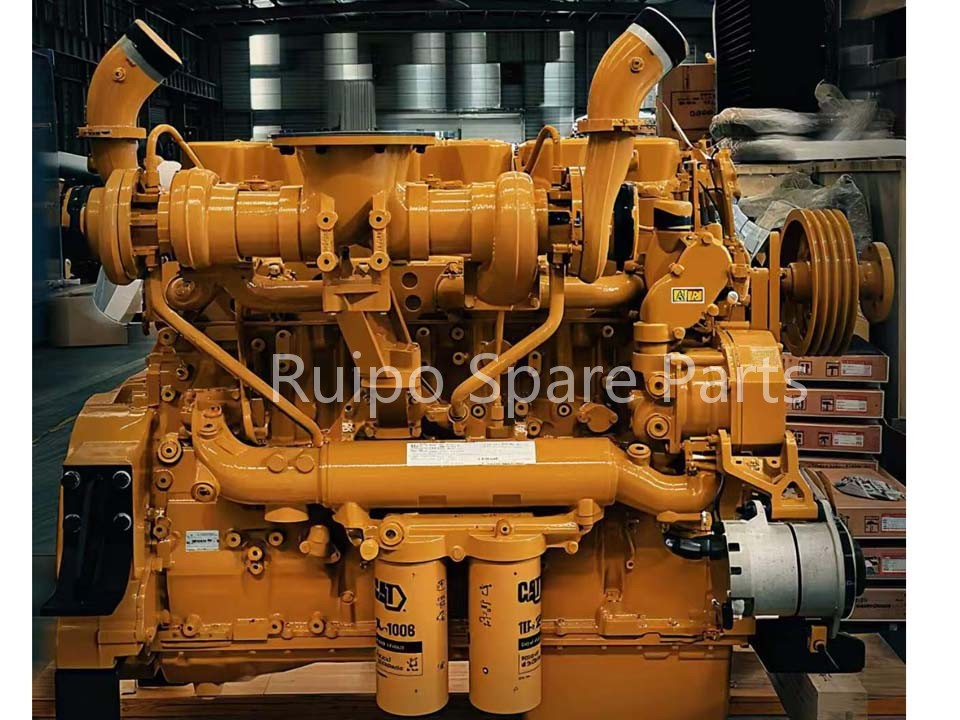
I think that’s one of the more expensive habits in heavy-equipment maintenance. A diesel engine doesn’t have to be seized, knocking, or pouring blue smoke before a diesel engine rebuild becomes a serious discussion. By that stage, the argument may have shifted from planned overhaul to crankshaft, block, turbocharger, cylinder-head, and downtime damage.
But the opposite mistake is just as bad: condemning an engine because of one symptom.
Smoke isn’t a diagnosis. Neither is blow-by.
The decision comes from the pattern.
The Diesel Engine Failure Signs That Actually Matter
Caterpillar’s own engine rebuild warning-sign guidance includes increased oil consumption, unusual noise, overheating, hard starting, misfiring, an unexpectedly high crankcase oil level, and metal debris in the oil filter. That’s a useful list because it doesn’t reduce the decision to engine hours alone.
Here’s how I would read those symptoms in the field.
1. Diesel Engine Blow-By Keeps Getting Worse
Some blow-by is normal.
Combustion pressure always gets past the piston rings to some degree. What matters is whether crankcase pressure is increasing compared with the same engine’s previous condition and whether other symptoms arrive with it.
Bad signs include:
Heavy vapor or oil mist from the breather
Increasing crankcase pressure
Oil being pushed through seals
Falling compression
Increasing oil consumption
Hard starting
Power loss under load
A badly worn ring-and-liner package allows more combustion gas to pass into the crankcase. The rings may be worn, broken, stuck with deposits, or simply unable to seal against a worn or polished liner.
But don’t rebuild from the breather tube alone.
I would want crankcase-pressure measurements against the engine manufacturer’s specification, followed by compression or cylinder-leakage testing. On electronically controlled engines, cylinder cut-out or contribution data can add another layer.
Trend first. Tear-down second.
2. Excessive Oil Consumption Suddenly Becomes Normal
This one gets tolerated for far too long.
An operator tops up the engine every shift. Then every day. Eventually the extra oil becomes part of the operating routine and nobody asks why.
That’s backwards.
Caterpillar specifically notes that a sudden increase in oil consumption can point toward worn or damaged rings and liners, but turbocharger seals and valve guides also need to be investigated.
California’s Air Resources Board makes a similar point in its heavy-duty diesel maintenance guidance: excessive lubricating-oil consumption needs repair, and higher oil consumption also increases ash loading in diesel particulate filters. CARB also warns that worn turbochargers or leaking turbo seals can put lubricating oil into the exhaust.
Diese Unterscheidung ist wichtig.
A turbo seal failure can make an otherwise serviceable engine look terminal.
So I wouldn’t ask only, “How much oil is it using?”
I’d ask:
How quickly is consumption changing?
Record makeup oil against fuel burned, engine hours, or kilometers. A rising consumption trend tells us far more than somebody saying, “It uses a bit of oil.”
3. Coolant Is Getting Into the Oil — Or Disappearing Without Explanation
This gets serious fast.
Water and coolant contamination attack the lubricant’s ability to protect bearings and loaded surfaces. Glycol contamination is especially unpleasant because the engine can continue operating while internal damage develops.
A common coolant base chemistry is ethylene glycol, C₂H₆O₂. Laboratory analysis may also flag coolant-related elements such as sodium (Na) and potassium (K), depending on coolant formulation.
And no, the oil doesn’t always need to look like a milkshake.
Caterpillar’s S·O·S fluid-analysis program tests for contaminants including water, fuel and glycol while simultaneously looking for abnormal wear metals. Caterpillar fluid analysis guidance
Possible sources include:
Cylinder-head gasket leakage
Cylinder-head cracking
Liner or liner-seal problems
Oil cooler failure
Coolant passage leakage
Other engine-specific internal leaks
CARB also recommends logging coolant additions instead of treating repeated top-ups as routine maintenance.
That’s basic advice.
It’s also frequently ignored.
4. The Diesel Engine Is Hard to Start — Especially When Cold
A hard starting diesel engine can be telling you that cylinder sealing is deteriorating.
Or not.
That’s why this symptom creates so many bad diagnoses.
Caterpillar identifies worn piston rings and liners among possible causes of hard starting and misfiring, while also naming fuel-injection pump, nozzle and injector faults.
Before authorizing a rebuild, I would check:
Battery voltage and cranking speed
Starter condition
Fuel pressure
Air in the fuel system
Injector performance
Intake restriction
Glow plugs or intake-heating system where fitted
Valve adjustment
Compression
Cylinder leakage
If compression is weak across several cylinders and the engine simultaneously shows high blow-by, rising oil consumption and poor cold-start performance, the rebuild argument becomes much stronger.
One symptom? Weak evidence.
Four related symptoms moving together? Different story.
5. Metal Starts Appearing in Oil Samples or the Filter
I take this one seriously.
Not because every iron reading means disaster, but because wear debris can tell you about internal damage before the operator hears it.
Typical elements monitored include:
Iron (Fe)
Copper (Cu)
Lead (Pb)
Chromium (Cr)
Aluminum (Al)
Tin (Sn)
Their meaning depends on engine metallurgy, oil formulation, sampling history and which component is wearing.
Deshalb metal in oil analysis should be treated as a trend, not a single magic ppm number.
Caterpillar explicitly states that fluid analysis can identify damaging wear metals, while its rebuild guidance warns that metal debris found in an oil filter can indicate bearing damage or other internal problems.
And there’s some interesting real-world evidence behind this.
What a 2024 Diesel Oil Study Actually Found
On December 28, 2024, Scientific Reports published a study examining SAE 10W-40 engine oil and maintenance records from two diesel-powered city buses that suffered major cooling-system failures.
These weren’t laboratory engines running on a test stand.
They were working buses.
Both vehicles eventually suffered failures serious enough to take them out of operation and require extensive engine repair. Researchers examined viscosity at 40°C and 100°C, oxidation, nitration, TAN, TBN, soot, glycol and elemental wear using methods including FTIR and HDXRF. 2024 Scientific Reports diesel oil-analysis study
One result jumps off the page.
Oil samples identified as 2378_I und 2378_II contained copper concentrations of 274 ppm und 76 ppm respectively. The researchers associated the abnormal wear evidence with the vehicle’s cooling-system problems and coolant contamination history.
Don’t turn 274 ppm into an internet rebuild limit.
It isn’t one.
Different engines use different bearing materials, bushings, coolers, lubricants and sampling intervals. The useful lesson is the relationship between abnormal trend + coolant problems + wear metals + documented mechanical failure.
That’s what condition monitoring is supposed to do.
A separate 2023 field study published in Lubricants also found that oil degradation patterns changed with operating profile and engine type, reinforcing a point maintenance departments sometimes dislike hearing: a universal oil number without operating context isn’t nearly as useful as a consistent trend from the same asset. 2023 field study on engine-oil degradation
One Symptom Is Noise; A Pattern Is Evidence
Here’s the diagnostic distinction I would use before discussing a diesel engine rebuild:
Because buying an overhaul kit for an engine that actually has a turbo, injector, cooling-system, starter, driveline or hydraulic problem is not preventive maintenance.
It’s an expensive guess.
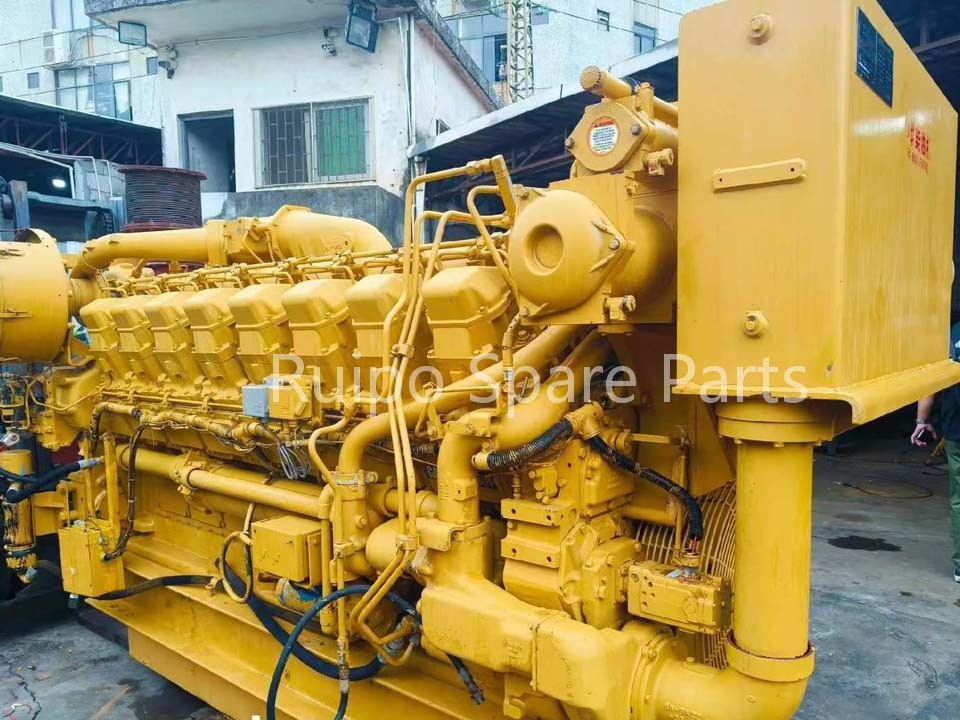
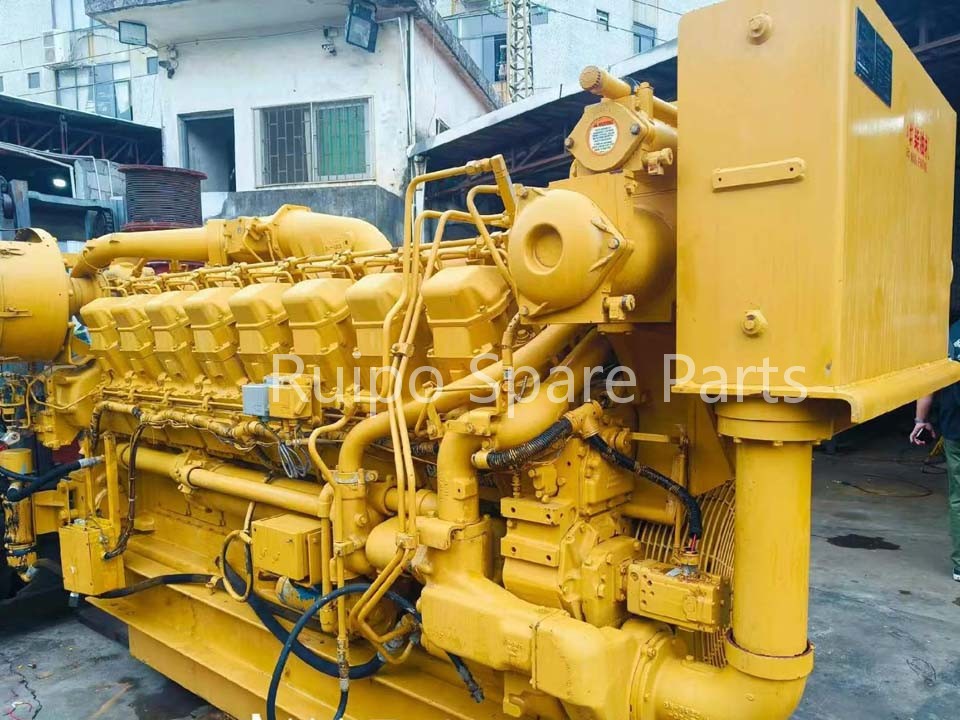
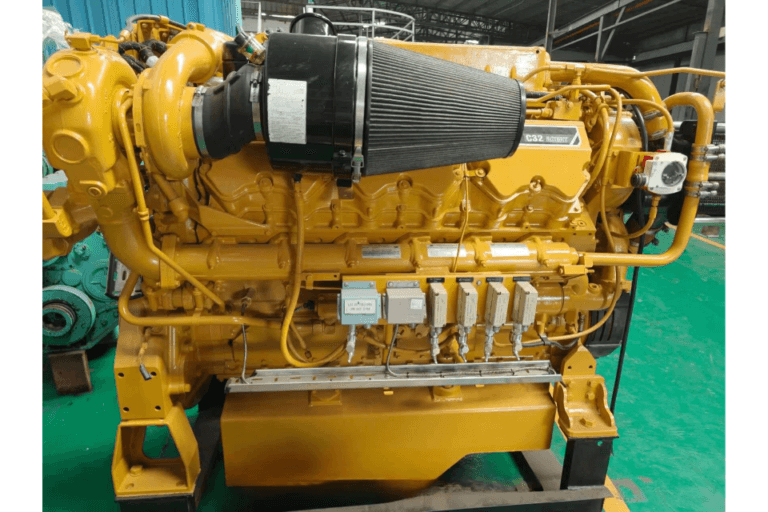
cat industrial engine side view
Don’t Condemn the Engine for a Driveline or Hydraulic Failure
This happens more than parts sellers like to admit.
Vibration, slow machine response, noise under load and poor overall performance can make an old machine feel as if the engine is finished even when the root fault is outside the engine.
Take vibration. Before blaming combustion or crankshaft problems, driveline inspection may lead you toward components such as a CAT 136-1755 universal joint group or related shaft components.
Clearance and setup faults matter too. A component such as the CAT 141-2156 2.1 mm steel shim pack belongs to a completely different diagnostic branch than piston rings and cylinder liners.
The same goes for control problems. If machine behavior points toward a valve or actuation fault, components such as a CAT 159-5149 relay valve need to be separated from actual combustion-related symptoms.
And sluggish hydraulic performance? That’s not automatically low engine power. A worn CAT 177-8924 hydraulic gear pump or another hydraulic fault can load or slow the machine while the diesel engine itself remains serviceable.
The hard truth is simple:
Diagnose the system, not the feeling.
When Does a Diesel Engine Need a Rebuild?
Not at a fixed number of hours.
I wouldn’t use 10,000 hours, 15,000 hours or any other round number as a universal rebuild trigger. An engine that spent its life at steady generator load with clean air, controlled coolant temperature and disciplined oil sampling has lived a very different life from an excavator engine repeatedly heat-soaked, idled, dust-loaded and worked at high transient load.
A 2024 Computers & Industrial Engineering study on a mining diesel engine treated maintenance timing as a degraded-state decision using failure data, maintenance cost and operating income rather than waiting for a simple binary “running/failed” event. That’s much closer to how B2B fleets should think about rebuild timing. 2024 mining diesel preventive-maintenance case study
For me, the rebuild case becomes much stronger when several independent indicators agree:
Blow-by or crankcase pressure is rising.
Compression is falling.
Oil consumption has materially increased.
Oil analysis shows an abnormal wear trend.
Coolant or fuel contamination is confirmed.
Oil pressure remains low after instrumentation is verified.
Hard starting persists after fuel and electrical causes are eliminated.
Borescope, leak-down or teardown inspection confirms internal wear.
The projected cost of continued component-by-component repairs exceeds the logic of a planned overhaul.
That’s the point.
Not when the hour meter reaches a mythical number.
The Test Sequence I Would Use Before Authorizing a Rebuild
Start cheap.
First, pull the service history. Look at oil additions, coolant additions, overheating events, previous injector work, oil-analysis reports and unexplained downtime.
Then inspect the obvious systems.
Check filters. Cut open the oil filter where appropriate and inspect the media. Look at coolant level, breather condition, external leaks, exhaust smoke and turbocharger condition.
Next comes measurement:
Mechanical oil-pressure test
Crankcase-pressure test
Compression testing
Cylinder leak-down where applicable
Cooling-system pressure test
Injector or cylinder-balance testing
Oil sample
Coolant sample
Borescope inspection
And keep the oil-sampling method consistent.
Caterpillar’s fluid-analysis guidance emphasizes using wear metals, contaminants and fluid condition together rather than reading one result in isolation. That’s exactly the approach I’d use.
Only after those results line up would I move from “possible engine problem” toward “planned diesel engine rebuild.”
FAQs
What are the main signs a diesel engine needs a rebuild?
A diesel engine usually needs a rebuild when multiple condition indicators—such as sustained blow-by, rising oil consumption, low compression, coolant contamination, abnormal wear metals, hard starting, and power loss—show that internal sealing or bearing surfaces are deteriorating beyond what an external repair can economically correct.
One sign by itself isn’t enough. A failed turbocharger, injector, starter, sensor or cooling-system component can imitate several symptoms associated with worn internal engine components. Confirm the pattern with compression testing, crankcase pressure, fluid analysis and physical inspection before authorizing major work.
Is diesel engine blow-by a definite sign that the engine needs rebuilding?
Diesel engine blow-by is combustion gas that escapes past the piston rings into the crankcase, and it becomes a rebuild warning when crankcase pressure rises persistently, oil mist increases, compression drops, or the trend worsens alongside oil consumption rather than appearing as a brief operating-condition change.
Every piston engine produces some blow-by. The useful number is the manufacturer’s permitted crankcase-pressure specification combined with that individual engine’s historical trend. Heavy visible vapor alone shouldn’t be treated as proof of worn liners.
How serious is metal in diesel engine oil analysis?
Metal in oil analysis means wear particles or dissolved elements are being detected in the lubricant, but a rebuild decision should be based on trend, particle type, concentration changes, filtration findings, and component metallurgy because a single iron or copper reading can be elevated for reasons other than imminent engine failure.
Iron, copper, chromium, lead, aluminum and tin may point toward different wear sources. Sudden increases across consecutive samples deserve attention, particularly when they coincide with low oil pressure, coolant contamination, blow-by or filter debris.
Does coolant contamination mean a diesel engine needs to be rebuilt?
Coolant contamination in engine oil is the presence of water, glycol, or coolant-derived elements such as sodium and potassium in the lubricant, and it demands fast diagnosis because glycol-water mixtures can damage lubrication quality, promote corrosion, and accelerate bearing or surface wear before an operator notices a dramatic change in performance.
It doesn’t automatically require a complete rebuild. A failed oil cooler or repairable sealing problem may be caught early. If contaminated oil has already circulated long enough to damage bearings, liners or other internal surfaces, however, the scope can become much larger.
Does hard starting mean the diesel engine has low compression?
Hard starting alone does not mean a diesel engine needs a rebuild; it becomes more persuasive when compression testing, cylinder leakage, smoke behavior, oil consumption, blow-by, injector checks, and starting-system tests collectively point to worn rings, liners, valves, or other internal components instead of a fuel or electrical fault.
Always check battery condition, starter speed and fuel delivery first. Slow cranking on a cold diesel can look remarkably similar to poor compression, and replacing internal engine parts won’t repair an electrical problem.
Your Next Step: Confirm the Failure Before Buying Parts
Don’t start with the overhaul quotation.
Start with evidence.
Build a short condition file for the engine: model, serial number, operating hours, oil-consumption trend, coolant-consumption trend, crankcase pressure, compression results, oil-analysis history, overheating history and photographs of any filter debris.
If those indicators converge on ring, liner, bearing or cylinder-head wear, then a planned diesel engine rebuild makes commercial sense. If they don’t, keep diagnosing.
That extra day of testing can be cheaper than removing a healthy engine.
For sourcing support, send RUIPO Spare Parts the engine model, serial number and confirmed part numbers. We can help identify and supply Genuine & Original engine and equipment parts for planned maintenance, repair and rebuild projects.