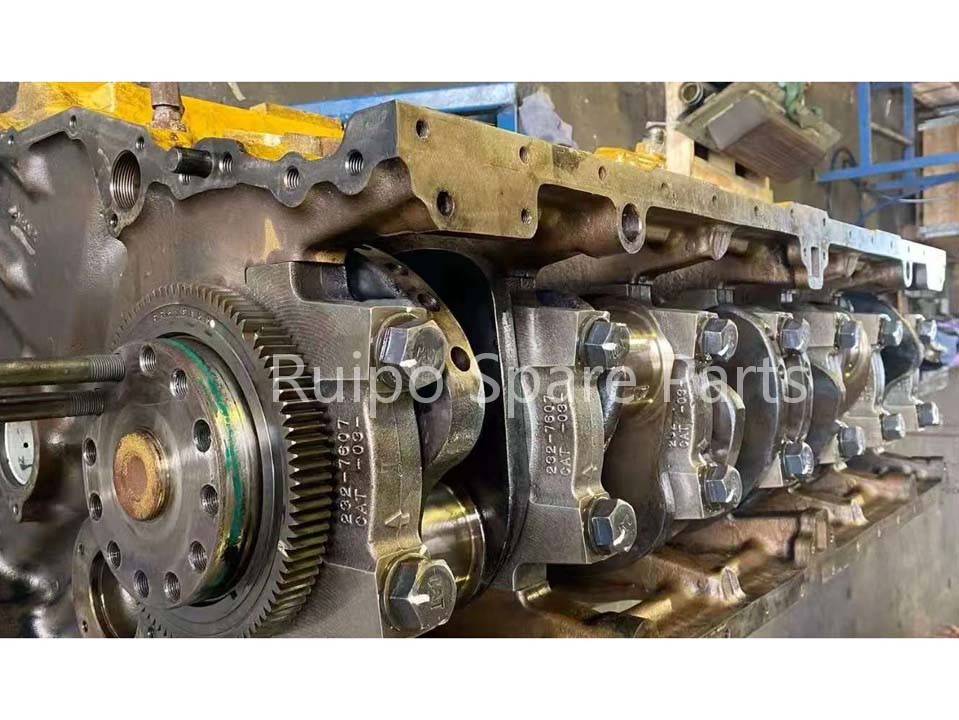
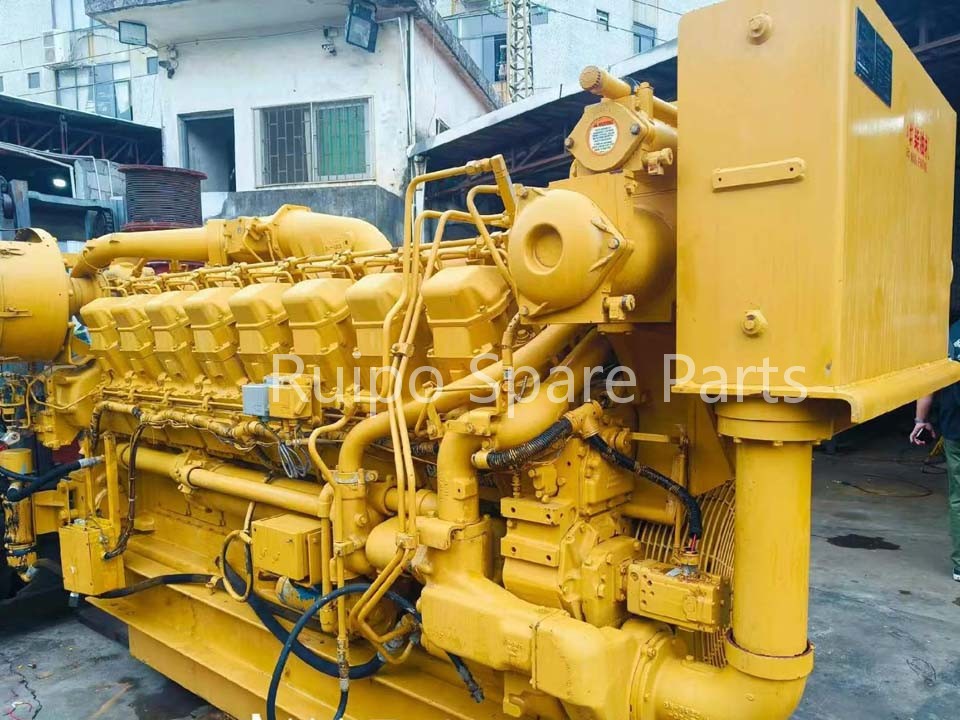
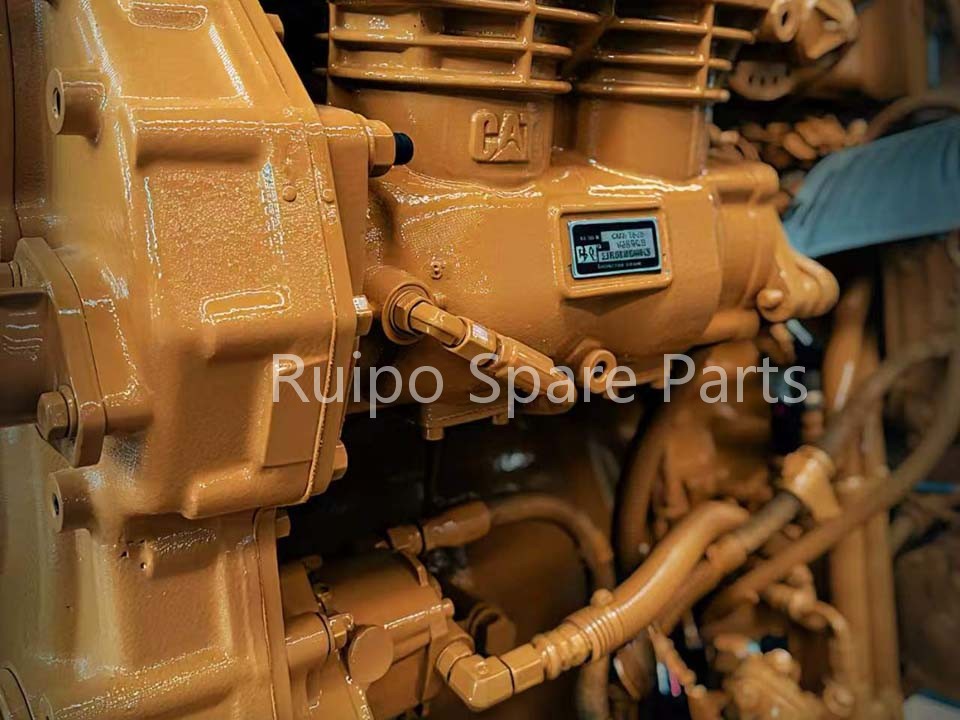
“Tedarikçi bize gerçek bir tek elden parça çözümü sundu. Ekipleri, ekipmanımız için doğru Caterpillar, Perkins ve filtre parçalarını eşleştirdi ve destek, sorgulamadan teslimata kadar hızlı ve profesyonel kaldı.”
Satın Alma Müdürü
Ağır Ekipman Parçaları Projeleri
DİĞERLERİ BİZİM HAKKIMIZDA NE DİYOR
“Tedarikçi bize gerçek bir tek elden parça çözümü sundu. Ekipleri, ekipmanımız için doğru Caterpillar, Perkins ve filtre parçalarını eşleştirdi ve destek, sorgulamadan teslimata kadar hızlı ve profesyonel kaldı.”
Çok Saat Çalışmış Bir Dizel Araç Hâlâ İyi Bir Satın Alma Seçeneği Olabilir mi? Önemli Muayene Kriterleri
A seller can point at 6,200 hours and make a tired machine sound attractive, while another unit showing 13,000 hours may have documented oil sampling, stable compression, a properly rebuilt top end, clean cooling history, and another meaningful service interval left in it.
Which engine would I rather own?
Probably the second one.
That answer bothers people because the used-equipment trade loves easy numbers. Hours. Model year. Asking price. Maybe a fresh coat of paint.
Mechanical condition isn’t that cooperative.
For anyone buying a high hour diesel, particularly an excavator, dozer, loader, generator set, marine engine, pump package, or other industrial machine, I treat the hour meter as the beginning of the investigation—not the conclusion.
A high hour diesel engine can absolutely still be a good buy. But only when the seller can prove what those hours actually did to the engine.
İçindekiler
High Hours Are a Data Point, Not an Engine Diagnosis
The first mistake is trying to invent one universal number for “too many hours.”
There isn’t one.
A diesel that accumulated 10,000 hours at relatively stable load with disciplined cooling-system maintenance can have a very different internal condition from an engine that accumulated 6,000 hours through short cycles, dust ingestion, repeated overheating, excessive idle, fuel contamination, cold starts, or severe lugging.
And market price doesn’t settle the argument either.
In May 2024, Reuters reported that U.S. farm-equipment dealers were cutting prices by as much as 30% in parts of the market as inventories built up; used machinery was also accumulating and auction-to-retail price gaps widened. That matters because a discounted machine may simply be caught in a soft market. A low price is not proof of mechanical distress, just as a high asking price isn’t proof of good maintenance.
This is where buyers get trapped.
They confuse market value ile mechanical evidence.
I wouldn’t.
Used Diesel Engine Inspection: Build an Evidence Ladder
A proper used diesel engine inspection should rank evidence according to how difficult it is for the seller to manipulate.
Paint is weak evidence. An invoice with an engine serial number is stronger. A cold start is stronger again. Compression, blow-by, oil pressure, ECM information, and repeated oil-analysis reports are much harder to talk around.
Here’s the hierarchy I would use.
Inspection Evidence
What I Want to See
What Makes Me Suspicious
Why It Matters
Hour meter
Consistent with ECM and service records
Meter replaced, unexplained gaps
Hours provide context, not condition
Cold start
Starts cleanly from ambient temperature
Engine already warm on arrival
Exposes starting, fuel and compression issues
Compression / relative compression
Cylinders reasonably balanced to OEM specification
A healthy engine can sit inside a worn-out machine
No single row makes the buying decision.
The pattern does.
Start the Engine Cold—or Learn Almost Nothing
I have a simple rule for a used diesel engine condition check: if the seller has warmed the machine before inspection, part of the test has already been lost.
A cold diesel tells stories.
Watch cranking speed. Listen for uneven firing. Note how long oil pressure takes to build. Watch exhaust behavior immediately after ignition rather than five minutes later when everything has stabilized.
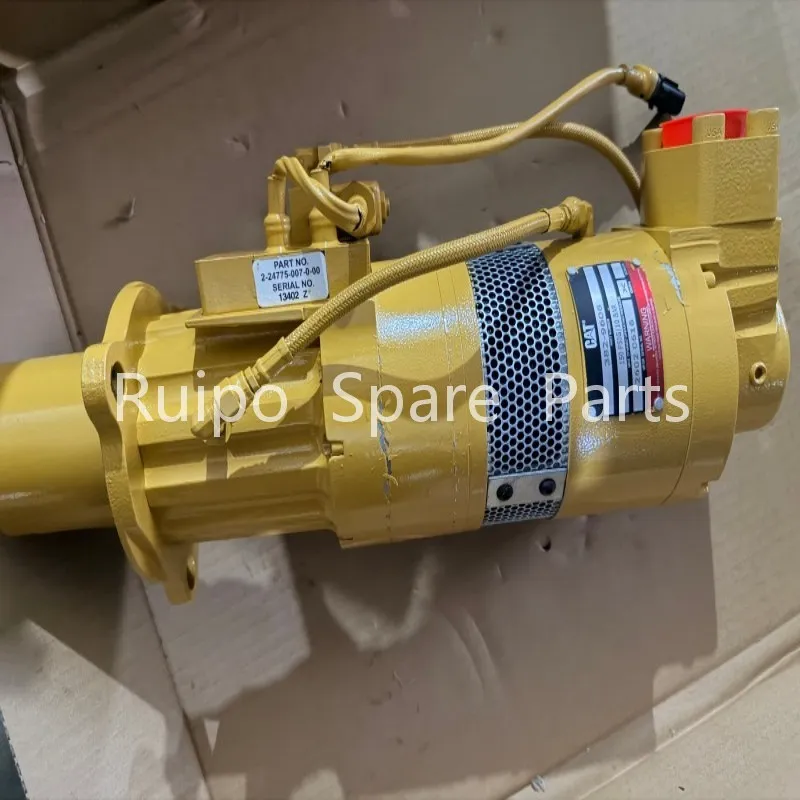
A tired starter or battery can also imitate poor engine condition, so don’t diagnose compression from cranking sound alone. Large industrial engines may use pneumatic starting systems rather than conventional electric starters; that makes the integrity of the starting system itself worth checking. A component such as the CAT 494-1756 air starting motor may therefore be part of the due-diligence picture on relevant Caterpillar applications.
And don’t fall for the classic line:
“It only smokes when it’s cold.”
Maybe.
Find out why.
Temporary white smoke can come from incomplete combustion during cold operation. Persistent smoke, rough firing, coolant loss, oil consumption, or one weak cylinder is a different conversation.
Diesel Engine Compression Test: Don’t Chase One Magic PSI Number
A diesel engine compression test is valuable, but buyers often misuse it.
Absolute compression depends on engine family, test method, cranking speed, engine temperature, atmospheric conditions, gauge accuracy, valve condition, and OEM procedure. A Caterpillar C4.4, an older mechanical 3306, and a modern electronically controlled industrial engine should not be judged against one internet PSI number.
Balance matters.
As a practical screening rule—not a Caterpillar, Perkins, Cummins, or other OEM specification—I would investigate a cylinder roughly 10–15% weaker than the strongest cylinder rather than wave it through because the engine still starts.
Then find the cause.
A low cylinder can point toward valves, rings, liner condition, head sealing, piston damage, or another combustion-chamber problem. Relative compression tests derived from starter current or electronic diagnostic systems can also be useful, particularly when traditional gauge testing is difficult.
But compression still isn’t the entire engine.
A high-hour diesel can pass a basic compression test while carrying problems elsewhere: turbocharger deterioration, coolant leakage, injector imbalance, bearing wear, oil dilution, aftercooler restriction, excessive crankcase pressure, or cooling-system degradation.
That’s why I want another piece of evidence.
Oil.
Diesel Engine Oil Analysis: The Engine Has Already Written the Report
Used oil is evidence.
Caterpillar’s S·O·S fluid analysis program specifically looks for wear metals and contaminants including iron, lead, copper, aluminum, chromium, silicon, sodium, water, fuel, glycol, and dirt across lubricated systems. Caterpillar also stresses analysis of oil condition rather than relying on appearance alone.
That matters because dark oil is not automatically bad oil.
And clean-looking oil isn’t automatically healthy.
Fresh oil poured in shortly before inspection can actually remove information.
I would much rather see a series of laboratory reports covering several service intervals. Trending is the key word here. Iron increasing steadily over three samples means something very different from one isolated iron result without history.
The U.S. military takes the same underlying idea seriously. The U.S. Army Oil Analysis Program uses laboratory oil analysis to identify developing conditions including contaminated or degraded lubricants, bearing wear, gear wear, air-induction leaks, fuel leaks, coolant leaks, and internal corrosion.
And this isn’t an abandoned maintenance philosophy. U.S. Navy records show an active Navy Oil Analysis Program instruction dated March 7, 2024, alongside an April 2024 Joint Oil Analysis Program instruction.
That’s institutional condition monitoring, not used-equipment sales talk.
Don’t Read One Metal in Isolation
Iron may suggest ferrous wear, but it doesn’t tell you by itself which component is failing.
Copper doesn’t automatically mean the bearings are finished.
Silicon may point toward dirt entry, but chemistry, lubricant formulation, sampling method, and operating environment matter.
Patterns matter more.
I want viscosity, fuel dilution, water or glycol contamination, soot, oxidation, wear metals, and—where applicable—acid/base condition interpreted together with hours on the oil and make-up oil consumption.
A 2024 published study available through the U.S. National Library of Medicine’s PubMed Central database illustrates the larger condition-monitoring principle particularly well: researchers evaluated turbine lubricant after 25,480 operating hours and combined multiple degradation measurements into a performance index rather than judging serviceability from hours alone. It was not a diesel-engine study, so its thresholds should not be transferred to an excavator engine, but the lesson is relevant—hours without condition data are incomplete evidence.
That’s the point.
Cooling and Intake Problems Can Kill an Otherwise Good High-Hour Diesel
Buyers spend too much time listening to the bottom end and not enough time examining what keeps the engine alive.
Cooling first.
Look for dried coolant traces, pressure-cap problems, stained expansion tanks, oil film in coolant, coolant in oil, radiator blockage, damaged fan drives, questionable thermostats, worn pumps, leaking hoses, and evidence that somebody keeps topping off the system without explaining where the coolant went.
Caterpillar has stated that cooling-system problems account for about 50% of engine downtime in the context of its S·O·S maintenance guidance. That’s a manufacturer figure rather than an independent industry statistic, but it explains why I won’t dismiss coolant evidence as routine housekeeping.
Then inspect the intake and charge-air path.
Loose clamps, split boots, dirt tracks downstream of the air filter, leaking charge-air connections, restricted cores, oil accumulation, and damaged cooling surfaces matter. On applicable C4.4 installations, for example, the condition of components such as a CAT 569-3053 C4.4 aftercooler belongs in the broader engine-health inspection rather than being treated as an unrelated bolt-on part.
A diesel breathes before it burns.
Ignore that system and you may misdiagnose the engine itself.
Application Severity Changes What 10,000 Hours Actually Means
This is where buyers should stop asking, “How many hours?”
Ask, “Doing what?”
A generator operating for long stretches at stable temperature and controlled load accumulates time differently from a dozer repeatedly loading hard in abrasive material. An excavator can spend significant meter time idling yet still punish its hydraulic system. A quarry machine may encounter dust, shock loading, high ambient temperature, and plugged coolers. Marine applications introduce their own cooling, corrosion, and load-profile problems.
Ten thousand hours is not one standardized unit of damage.
Never was.
Even OSHA’s heavy-equipment inspection framework recognizes the concept of severe service, including conditions such as overload, shock loading, and prolonged exposure to corrosive environments, when determining inspection needs for covered equipment. That regulation isn’t an engine-life formula, but the engineering logic is familiar: severity changes what operating time means.
Modern nonroad engines add another layer. The U.S. EPA’s nonroad diesel regulations explain that Tier 4 engines use advanced emission-control technologies and ultra-low-sulfur diesel capped at 15 ppm sulfur. On these machines, a buyer should inspect not only the mechanical core but also the EGR, DPF, SCR, sensors, dosing system, wiring, and stored fault history where fitted.
An older mechanical diesel and a modern Tier 4 engine can both have 9,000 hours.
The risk profile isn’t remotely identical.
Rebuild History: The Word “Rebuilt” Means Almost Nothing by Itself
Here’s one of the phrases I distrust most in a used-equipment advertisement:
“Engine rebuilt.”
Fine.
What was rebuilt?
Injectors and a head gasket?
Cylinder head?
In-frame overhaul?
Pistons and liners?
Main and rod bearings?
Crankshaft measured or replaced?
Turbocharger?
Oil pump?
Water pump?
Fuel system?
And at what engine hours?
A proper diesel engine rebuild history should identify the machine serial number, engine serial number, date, meter reading, repair facility, parts used, machining performed, measurements taken, and the exact components replaced.
Invoices beat adjectives.
If the seller claims a rebuild at 8,400 hours and the machine now shows 11,200, I want documentation connecting that repair to that actual engine serial number. I also want to know whether the hour meter, ECM hours, and service records agree.
A rebuild doesn’t magically turn the rest of the machine back to zero hours either.
That’s where expensive buying mistakes happen.
High-Hour Heavy Equipment Is More Than Its Engine
You can buy a healthy engine inside a financially exhausted machine.
That is a bad deal.
On high hour heavy equipment, inspect the transmission, torque converter where applicable, hydraulic pumps, control valves, swing system, final drives, undercarriage, pins and bushings, cooling package, electrical harnesses, brakes, steering system, structural repairs, and attachments.
For example, transmission behavior shouldn’t be dismissed because the engine pulls strongly. If shift quality, pressure, control response, or diagnostic history points toward the transmission-control system, components such as a CAT 491-3721 transmission control group become part of the ownership-cost question.
Same story with seemingly smaller components.
A worn accessory drive may be cheap compared with an engine overhaul, but failed belts, tensioners, pulleys, or driven accessories can still strand a machine. On applicable equipment, checking the drive system around a part such as the CAT 565-0859 8-rib serpentine belt for D9 GC is basic inspection work, not cosmetic maintenance.
The engine is one asset inside another asset.
Don’t forget that.
Price the Risk Instead of Buying the Seller’s Story
Consider a deliberately simplified example. A machine costs $42,000. Inspection identifies $8,000 in immediate work, another $10,000 of deferred maintenance, and enough uncertainty around the engine or hydraulic system that you reserve $25,000 against a major failure.
You are no longer analyzing a $42,000 machine.
You are analyzing roughly $85,000 of exposure before freight and downtime.
Those numbers are illustrative, not market quotations, but the method is the part that matters.
This is also why a high-hour machine with unusually strong documentation can be more attractive than a lower-hour mystery machine. The seller has reduced uncertainty, and uncertainty has a price.
I would happily inspect a 12,000-hour engine with five years of fluid reports and documented repairs before getting excited about a supposedly 6,000-hour machine that is already warm when I arrive and somehow has no maintenance invoices.
Pretty paint is cheap.
Evidence isn’t.
SSS
Is a high hour diesel worth buying?
A high hour diesel engine can be worth buying when its mechanical condition, compression balance, oil-analysis history, cooling performance, rebuild documentation, and previous duty cycle show that the engine still has usable service life and when the purchase price adequately reflects the remaining repair and downtime risk. Hours alone should not decide the purchase.
The exact acceptable hour figure depends heavily on engine design and application. A prime-power generator, haul machine, excavator, marine engine, and standby generator can accumulate the same meter hours under completely different thermal and load conditions.
What is considered high hours on a diesel engine?
High hours on a diesel engine means the engine has accumulated enough operating time that wear history, previous overhauls, application severity, and component condition become more informative than the hour-meter number itself; there is no universal hour threshold that accurately defines a diesel engine as worn out across all models and applications.
For some equipment, 10,000 hours may be late life. For another properly maintained industrial diesel, it may not be. Compare the machine with the manufacturer’s expected maintenance and overhaul intervals, then inspect its actual condition.
How should I perform a used diesel engine inspection?
A used diesel engine inspection should combine a genuine cold start, compression or relative-compression evidence, blow-by evaluation, oil pressure, fluid analysis, cooling-system checks, intake and turbo inspection, fault-code review, maintenance history, rebuild documentation, and verification that the hour meter agrees with electronic and service records where those records are available.
Do not perform these checks in isolation. A weak result that agrees with two or three other warning signs is far more meaningful than one unusual measurement by itself.
How important is a diesel engine compression test?
A diesel engine compression test is an important condition check because it can expose imbalance between cylinders and indicate possible valve, piston-ring, liner, head-sealing, or combustion-chamber problems, but the results must be compared with the engine manufacturer’s procedure and specifications rather than a universal PSI value found online.
Test temperature, altitude, starter speed, battery condition, test equipment, and engine design can change the reading. Cylinder-to-cylinder consistency is often one of the first things I examine.
Can diesel engine oil analysis tell whether an engine is worn out?
Diesel engine oil analysis can reveal patterns associated with abnormal wear, contamination, fuel dilution, coolant entry, dirt ingestion, viscosity change, oxidation, and other developing problems, but one sample cannot reliably declare an engine healthy or worn out because trend data across multiple service intervals provides much stronger diagnostic evidence.
Always record oil hours, engine hours, oil added between changes, lubricant type, and sampling conditions. Without that context, impressive-looking laboratory numbers can still be misleading.
Does an engine rebuild reset the importance of total machine hours?
An engine rebuild does not reset the total machine hours because the transmission, hydraulic system, final drives, cooling package, electrical components, structure, undercarriage, pumps, valves, and many auxiliary systems may still retain the wear accumulated during the machine’s original operating life even if major internal engine components were renewed.
Record both total machine hours and hours since the documented rebuild. They answer two different questions.
Your Next Step: Buy the Evidence, Not the Hour Meter
A high hour diesel engine isn’t automatically a bargain.
It isn’t automatically junk either.
The buying decision becomes much clearer when you stop asking only how long the engine has run and start asking what the compression looks like, what the oil has been reporting, what was actually replaced during the last rebuild, how the machine earned its hours, and what expensive systems outside the engine are approaching their own repair cycle.
Before purchasing high-hour Caterpillar equipment, collect the machine model, engine model, serial-number prefix, engine serial number, operating hours, fault information, maintenance records, oil-analysis reports, and known part numbers.
If the inspection shows that cooling, air-start, accessory-drive, transmission, or other Caterpillar components need attention, contact RUIPO Spare Parts with the relevant part numbers and application information. We supply Genuine & Original CAT parts and can help confirm part-number and application details before your enquiry.