“The supplier gave us a true one-stop parts solution. Their team matched the right Caterpillar, Perkins, and filter parts for our equipment, and the support stayed fast and professional from inquiry to delivery.”
Procurement Manager
Heavy Equipment Parts Projects
WHAT oTHERs SAY about us
“The supplier gave us a true one-stop parts solution. Their team matched the right Caterpillar, Perkins, and filter parts for our equipment, and the support stayed fast and professional from inquiry to delivery.”
Caterpillar Engine Life Expectancy: What Buyers Should Benchmark
Three words only.
I have watched too many buyers chase a single life-expectancy number, as if every Cat C15 ACERT, C18, or 3516B ages on the same clock, when the manufacturer’s own material already tells you the opposite: operating conditions, rating, maintenance practice, oil intervals, coolant discipline, and fluid analysis all change the outcome, and even Cat’s published figures are conditional rather than universal. For one example, Caterpillar literature for a C15 ACERT industrial engine says optimal oil-change intervals can run up to 500 hours depending on application and maintenance practice, and lists engine B10 life up to 10,000 hours for certain Tier 4 Final/Stage IV configurations; Cat also says its S·O·S lab is there to catch abnormal oil, coolant, and fuel before big failures happen. That is not a lifetime promise. It is a warning label for lazy buyers. Cat C15 ACERT specification sheet and Cat’s fluid-analysis guidance both point the same way: trend data beats folklore.
Table of Contents
So what should buyers benchmark?
My answer is blunt: benchmark evidence density, not seller confidence. Hours matter, yes. But hours without oil reports, coolant history, injector history, overhead records, and proof of who touched the engine are often worse than a higher-hour unit with disciplined maintenance. And in 2024, this mattered even more because price pressure stayed real across Caterpillar’s machinery business while operators were still paying meaningful diesel bills; Reuters reported Caterpillar’s operating profit rose on mining demand and higher prices, while EIA’s U.S. on-highway diesel series shows monthly national averages sliding from $4.576 per gallon in January 2023 to $3.494 in December 2024, still high enough that inefficient or sick engines punish owners fast. Reuters’ February 2024 report and the EIA diesel price series are useful here because they explain why rebuild timing is now a finance question, not just a workshop question.
The benchmarking framework I would actually use
I do not buy the old forum line that asks, “How long do Cat engines last?” That question is soft. The harder, better question is this: At what point do verified hours stop being an asset and start becoming an overhaul reserve?
A buyer’s benchmark table, not a fantasy table
Verified engine condition band
My buying interpretation
What I would require before purchase
Stocking implication
Under 8,000 hours with full records
Still a running asset
Serial verification, oil/coolant reports, blow-by notes, injector history
Hard proof of rebuild scope, liner/piston status, head work, injector replacement
Carry injectors, water pump, head-related parts
15,000+ hours without major paperwork
Core value dressed as a runner
Price it as overhaul exposure from day one
Stock for teardown demand, not just maintenance demand
That table is my editorial benchmark, not a factory warranty chart. But it is anchored in how Caterpillar itself frames service life: conditions and maintenance change the interval, cooling failure drives damage, and fluid analysis is supposed to catch trouble before it becomes metal. If a seller cannot produce that trail, I assume the hours are underreported, the maintenance was reactive, or both. Usually both. Cat’s cooling-system guidance and Cat’s industrial-parts/analysis page support the basic logic: condition monitoring is not optional once engines age into the middle of their life curve.
What really kills Cat engine service life before the hour meter does
Cooling neglect ruins the math
Short sentence first.
Heat kills engines long before hours do, which is why I pay almost insulting attention to coolant chemistry, pump condition, radiator cleanliness, fan-drive performance, and whether the seller has ever replaced the water pump before asking me to believe the story on the hour meter. Caterpillar says plainly that the cooling system is vital to preventing overheating and engine damage, and the National Transportation Safety Board has already shown how poor system control can escalate into catastrophic failure: in its July 2024 Sandy Ground report, the NTSB found a diesel-engine fuel return design that allowed overpressurization contributed to fire after fuel sprayed onto a hot exhaust manifold. Different system, same lesson—small support systems end big engines. Cat’s cooling-system maintenance note and the NTSB Sandy Ground report are worth reading line by line.
That is why a buyer who is serious about Cat engine overhaul timing should already know whether a 203-6093 Caterpillar water pump is normal shelf stock for the engine family in question. If the cooling story is vague, I stop treating the engine as a dependable runner and start treating it as a near-term overhaul candidate.
Fuel-system slop is where “good runners” go to lie
Here is another hard truth.
Injectors do not usually fail politely, and a used engine with uneven fueling, rough cold starts, white smoke, hard hot restarts, or suspiciously “recent tune-up” language is telling you something about future spend, not past care. The NTSB’s Sandy Ground case is again instructive because the fire involved ruptured secondary duplex fuel-oil filters and sprayed fuel, and the board concluded the system’s overpressurization and inadequate training were central to the casualty. That is not a Cat-specific defect story; it is an industry story about how fuel-side neglect turns into major loss.
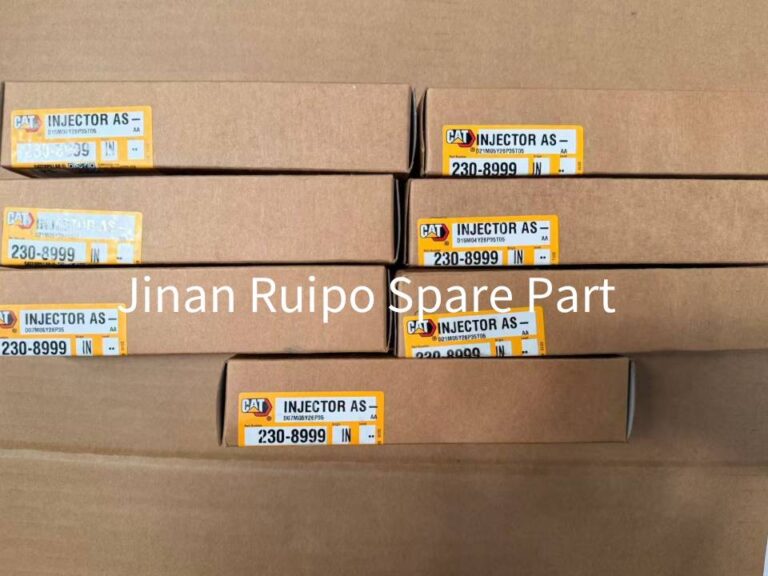
For parts buyers, this is where stocking moves from theory to margin. If your market leans on C15 and C18 cores, then 230-8999 Caterpillar primary fuel injectors and a 253-0616 fuel injector group for Cat C18 engines are not “just in case” items; they are what smart wholesalers carry when the field starts asking how long do Cat engines last and what they usually need before or during top-end work.
The top end is where wishful thinking gets expensive
I say this a lot.
Once a used Caterpillar engine crosses into the 10,000-hour conversation, I stop caring about sales adjectives and start asking whether the head has been off, whether valves and seats were measured, whether overheads were done on schedule, whether coolant contamination ever showed sodium or potassium, and whether the seller can document exactly what “rebuilt” means. Not rebuilt-ish. Rebuilt by whom, with what scope, and on what date?
This is why I would rather buy a transparent engine with documented head work than a “never opened” engine with a pretty coat of paint. For importers and rebuild shops, a cylinder head for Caterpillar C15 and C18 engines belongs in the same planning conversation as injector kits and cooling components, because top-end fatigue is where used-engine purchasing turns into either profit or a warranty headache.
The compliance trap that changes used-engine value
This part gets ignored.
A deleted or tampered engine may run fine today, but for a professional buyer it carries legal, resale, and border risk that can wreck the economics of the deal, especially when you are buying for regulated fleets or for jurisdictions that care about certification lineage and emissions hardware. EPA says it finalized 172 civil defeat-device cases from FY2020 through FY2023, totaling $55.5 million in civil penalties, and 17 criminal cases with additional penalties and restitution; DOJ also announced in September 2024 that an Oregon diesel repair shop and its owner were sentenced for tampering with pollution-monitoring devices on at least 184 vehicles. That is not abstract policy. That is a due-diligence bill. EPA’s defeat-device enforcement summary and the DOJ’s Oregon case release should be sitting in every procurement folder.
And regulation is tightening, not loosening, where it counts for heavy-duty buyers. CARB says its Omnibus regime makes 2024-and-later engines meet a 75% lower NOx standard than the 2010 benchmark—down from 0.20 to 0.050 g/bhp-hr for 2024-2026 model years—cuts PM to 0.005 g/bhp-hr, and lengthens useful life and emissions warranty requirements; CARB also says the regulation will cut heavy-duty NOx emissions by 90% and extend engine warranties. That changes resale logic, stocking logic, and the discount you should demand on any engine with fuzzy emissions provenance. CARB’s Omnibus fact sheet and its December 2024 waiver announcement are the real backdrop here.
So, best used Cat engine hours to buy?
My view is simple: the best hours are the hours that come with proof. An 11,000-hour engine with clean S·O·S history, documented injector work, stable cooling, and honest emissions status can be a better commercial buy than a 7,000-hour mystery motor. Skeptical buyers learn this once. Expensive buyers learn it twice.
FAQs
How long do Cat engines last?
Caterpillar engine life expectancy is the realistic operating window before a buyer should expect major top-end work or a full overhaul, and for C15/C18-class engines that window is best judged through verified hours, maintenance discipline, fluid-trend data, and duty cycle rather than one universal lifespan figure. Cat’s own published life and interval figures are conditional, not absolute.
In plain English, I would not trust any blanket answer that ignores application. A generator set, an oilfield engine, and a vocational on-road engine may share a badge and still age very differently. That is why Cat engine service life should be benchmarked against records, not rumors.
What are Caterpillar engine hours before overhaul?
Caterpillar engine hours before overhaul are the documented operating hours at which a buyer should begin reserving capital for top-end or in-frame work, and in real buying practice that often becomes a risk conversation somewhere around the 8,000- to 12,000-hour band unless the maintenance file is unusually strong.
I frame that as a buying benchmark, not a factory decree. If the seller has oil trends, coolant trends, injector dates, overhead records, and honest emissions paperwork, the engine may deserve a premium. Without that file, higher hours should be priced as looming spend.
When should buyers rebuild a Cat engine?
A buyer should plan to rebuild a Cat engine when condition data, not just total hours, shows wear acceleration through blow-by, oil contamination, coolant issues, compression imbalance, injector drift, overheating history, or top-end fatigue, because those signals usually predict downtime more accurately than the dashboard hour count alone.
That is the real answer to when to rebuild a Cat engine. I would rather rebuild slightly early with a controlled parts list than wait for a hot event, a fuel-side failure, or a head problem to choose the timing for me. The NTSB’s 2024 findings are a reminder that support-system neglect can turn routine machinery into a casualty report.
What is the safest used Caterpillar engine buying guide rule?
The safest used Caterpillar engine buying guide rule is to discount every undocumented engine twice: once for mechanical uncertainty and once for compliance uncertainty, because missing service records can hide overhaul exposure while missing emissions history can damage resale, registration, or fleet eligibility in regulated markets.
I would ask for serial verification, oil and coolant reports, injector and head-work records, and proof that the engine has not been emissions-tampered. If any of that is missing, price it like a project, not a prize. DOJ and EPA enforcement history makes that more than a theoretical concern.
Your next move before you wire money
Do this first.
Build your purchasing worksheet around hours, records, cooling health, fuel-system history, top-end history, and emissions status. Then map those findings directly into your stocking plan: water pumps for cooling risk, injectors for fuel-side instability, heads for top-end fatigue, and overhaul reserves for anything sitting in the 10,000-hour-plus gray band without clean paperwork. If you are a wholesaler or importer, stop asking whether a used Cat engine “still runs.” Ask whether the evidence says it will still earn. That is the only benchmark that counts.