“O fornecedor ofereceu-nos uma verdadeira solução de peças num só local. A sua equipa fez corresponder as peças Caterpillar, Perkins e de filtro certas para o nosso equipamento, e o apoio manteve-se rápido e profissional desde a consulta até à entrega.”
Gestor de aquisições
Projectos de peças para equipamento pesado
o que os outros dizem sobre nós
“O fornecedor ofereceu-nos uma verdadeira solução de peças num só local. A sua equipa fez corresponder as peças Caterpillar, Perkins e de filtro certas para o nosso equipamento, e o apoio manteve-se rápido e profissional desde a consulta até à entrega.”
Como as horas de funcionamento do motor afetam o valor do equipamento usado e o poder de negociação
The excavator looked almost too clean.
Fresh black paint covered the track frames. The cab floor had been washed. Somebody had even wiped the dust from the monitor bezel, leaving one bright number sitting in the middle of the display:
4,280 hours.
Everyone stared at it.
Nobody asked why the engine was already warm.
That bothered me.
Because when a seller heats a diesel before the inspection team arrives, parks the machine where the hydraulics can’t be properly loaded, and talks constantly while the buyer checks the blow-by, the hour meter is no longer the most interesting thing in the cab.
It’s just bait.
Maybe the hours are genuine. Maybe every one of them can be matched to dealer service records, ECM totals, telematics logs, fuel consumption, and dated work orders.
Or maybe not.
That’s why I frankly believe buyers should stop treating equipment hours as a mechanical verdict. An hour meter records elapsed operation, yet it says nothing about cold starts, dust ingestion, relief-valve work, overheating, long idle periods, poor fuel, missed grease intervals, or the operator who kept working after the warning lamp came on.
A number can’t confess.
Steel does.
Índice
Buyers Worship the Meter Because It’s Easy
Why does a 5,000-hour machine feel safer than an 8,000-hour one?
Because 5,000 is easy to explain in a purchasing meeting.
The undercarriage measurement isn’t. Neither is hydraulic drift, crankcase pressure, hot-idle oil pressure, fuel dilution, cylinder-rod scoring, turbo end play, pump case drain, or the faint metallic debris stuck to a final-drive plug.
Hours fit in one spreadsheet cell.
Condition doesn’t.
But used equipment value has never been determined by whichever number is easiest to paste into a report. It’s determined by what the machine can still produce, what it will cost to keep producing, and what another buyer may pay when your company is finished with it.
That calculation gets messy.
Good.
Real machinery valuation should be messy because machinery lives messy lives.
O Rouse Q3 2024 Market Trends Report shows why a single variable can mislead. In the United States, hydraulic excavators sold at auction during July–September 2024 carried a median price of roughly USD 40,000, compared with around USD 50,000 during the same quarter of 2023. Median age increased from approximately seven years to nine, while median usage moved from roughly 5,300 hours to slightly above 6,000 hours.
A tidy analyst could stop there.
Higher age. Higher hours. Lower price.
Case closed?
Not remotely.
Auction volume changed. The machine mix changed. Models, operating weights, regions, specifications, attachments, financing conditions, seller urgency, and buyer appetite changed too. Hours were sitting inside the data, but they weren’t driving the auction truck alone.
Another example is even more awkward.
Ritchie Bros. reported that the median auction price of crawler excavators fell 21% during a 2023 comparison period, even though the median age of the machines was two years lower than in the comparable period.
Younger iron.
Less money.
That’s what happens when supply, demand, model mix, and bidder behavior refuse to obey a simplistic depreciation story.
So yes, hours matter.
But they don’t get the final vote.
Six Thousand Easy Hours—or Six Thousand Angry Ones?
Let’s park two identical excavators beside each other.
Same model. Same production year. Same bucket size. Both meters show 6,000 hours.
Machine A spent most of its life loading loose aggregate. It received scheduled oil sampling, proper warm-up, clean fuel, regular cooling-pack cleaning, and grease at the pins before the joints began hammering themselves oval.
Machine B ran a breaker in rock, idled through lunch and shift changes, sucked fine dust through a neglected intake system, worked with hydraulic oil close to the temperature alarm, and was serviced whenever the crew “found time.”
Same hours.
Not the same machine.
Yet buyers routinely apply a low-hour or high-hour label before they know anything about duty cycle.
Isso é ao contrário.
A service meter measures duration, not punishment. The machine could have spent 2,000 hours idling beside haul trucks, or it could have spent those same 2,000 hours crowding the stick into hard material while the main pump sat close to relief pressure.
Which one consumed more life?
You already know.
Forget the Cab Shine—Inspect the Expensive Areas
But sellers understand presentation.
They shampoo the seat, spray silicone on faded plastic, touch up the counterweight, paint the track shoes, and arrange the machine so the afternoon sun catches the body panels rather than the oil mist below the pump compartment.
It works.
Sometimes.
A serious inspection moves away from the shine and toward the places where operating history leaves fingerprints:
Cold-start crank time
Exhaust smoke during startup and acceleration
Blow-by after reaching operating temperature
Hot-idle engine oil pressure
Coolant staining or unexplained pressurization
Engine oil, coolant, fuel, and hydraulic-fluid samples
Hydraulic cycle speed with warm oil
Boom and stick drift
Main-pump noise under load
Pump case-drain flow
Transmission engagement delay
Brake holding performance
Final-drive leakage and plug debris
Track-chain stretch
Roller, idler, sprocket, and shoe condition
Pin-and-bushing play
Cracks around bosses, welds, frames, and mounting points
ECM fault and event history
Cab wear that doesn’t match the claimed hours
Look underneath too.
A machine’s belly guards can tell a more honest story than the dashboard. Bent plates, packed debris, rubbed hoses, damaged harness clips, mismatched fasteners, sealant smeared around leaking joints—none of that appears in the seller’s hour count.
Small parts talk loudly.
Consider something as ordinary as a CAT 2N-2766 cone lock nut for heavy-equipment repairs. The cost of one fastener is tiny beside the value of the machine, but the hardware choices across a repaired unit reveal whether previous technicians followed specifications or simply emptied the nearest bolt bin.
Isso é importante.
A sloppy repair culture rarely stays confined to nuts and washers.
Warranty Risk Hides Behind the Calendar
“The machine is only eighteen months old.”
That sounds comforting.
Until somebody checks the hour limit.
Caterpillar states that limited warranty coverage for certain new Cat equipment, power systems, and engines may run for 12 or 24 months or for a specified number of operating hours, with exact coverage depending on the product, application, location, and applicable warranty terms. Cat Certified Used coverage may also be limited by months or operating hours.
That little “or” changes the deal.
A high-utilization rental machine can burn through an hour-based limit while the paint still looks fresh. A generator running long prime-power shifts may consume coverage far faster than a standby set installed on the same date.
Yet listings continue to use the phrase “under warranty” as if it were complete information.
And don’t accept “the local dealer should handle it.”
Should?
That word has ruined plenty of budgets.
Higher Hours Don’t Mean Failure Tomorrow
Here’s where buyers overcorrect.
They discover that hours aren’t everything, then pretend hours mean nothing.
That’s equally foolish.
A 12,000-hour engine may run cleanly today, hold oil pressure, start quickly, and produce rated power. It may continue doing so for years. But as component hours accumulate, the probability of an expensive event moving into your ownership period generally rises—and procurement teams need to price that exposure before signing, not after the machine goes quiet.
That’s the point.
Not predicting the exact failure date.
Pricing the uncertainty.
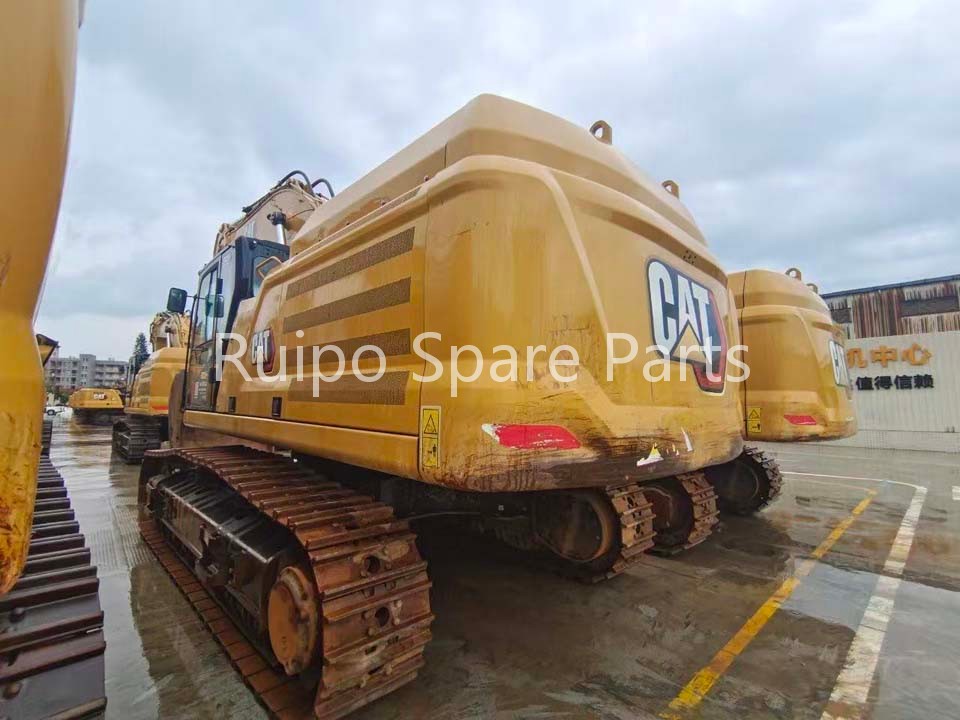
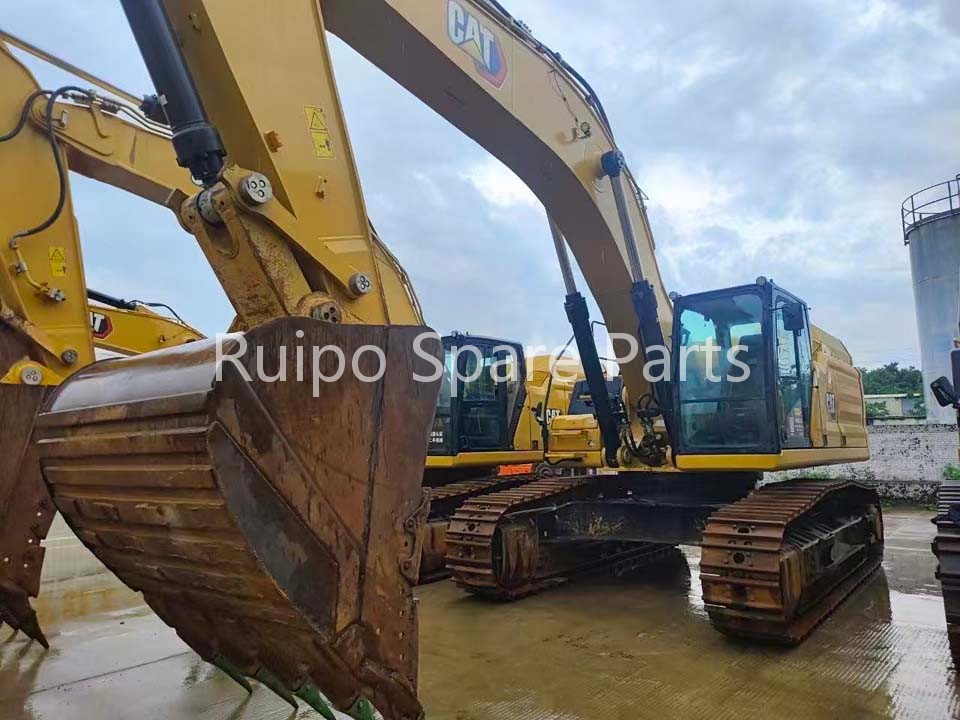
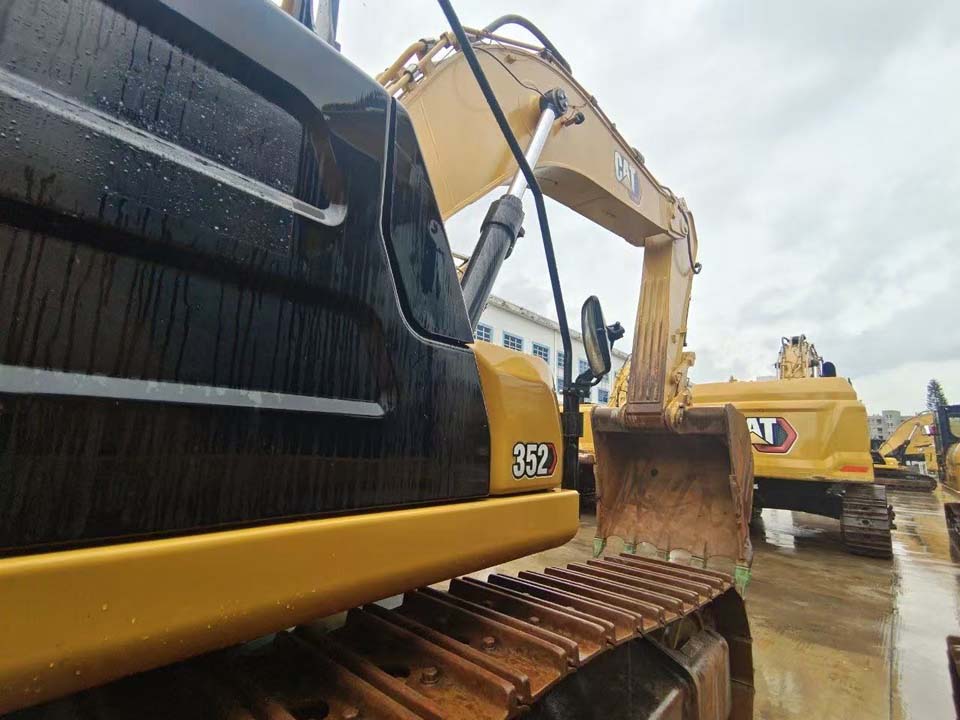
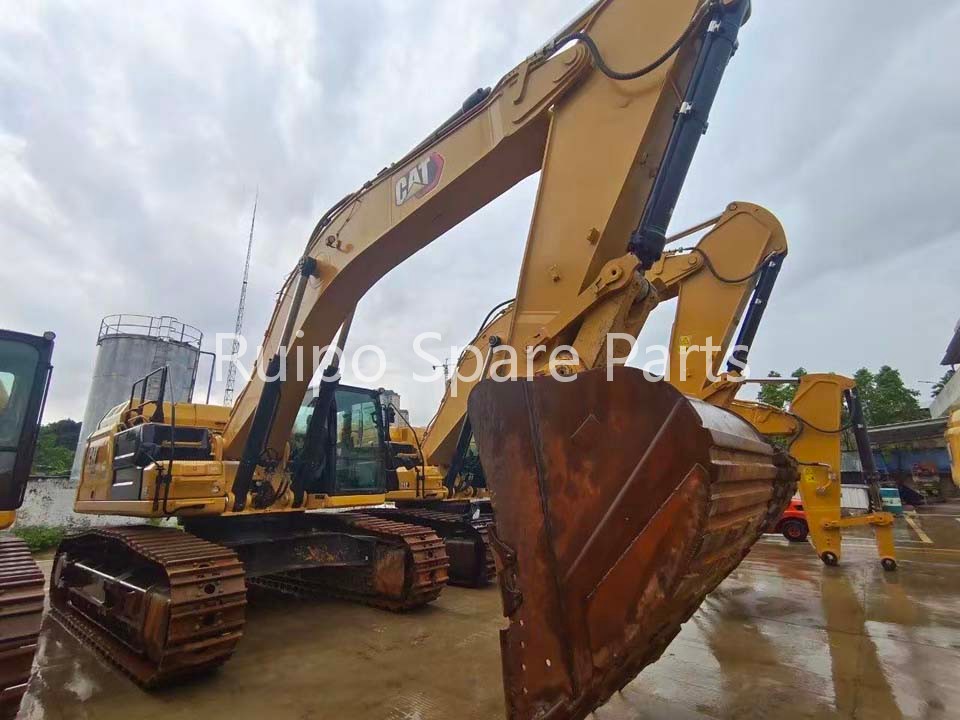
escavadora cat352
Lubrication History Can Be Worth More Than Paint
On heavy Caterpillar 3512 and 3516 applications, I’d spend more time studying lubrication records than admiring the outside of the engine.
Porquê?
Because weak oil pressure, fuel dilution, soot loading, coolant contamination, overheated oil, extended drains, or metallic wear particles can quietly damage bearings and rotating assemblies while the engine continues sounding reasonably healthy at idle.
The bill arrives later.
A component such as the Caterpillar 4P-5638 two-section engine oil pump for 3512 and 3516 engines sits inside that larger lubrication-risk discussion. If the seller reports previous pressure problems but can’t produce test results, repair invoices, replaced-component details, or post-repair oil analysis, the claim has no positive value.
Deduct for uncertainty.
Don’t reward storytelling.
Slow Starting Isn’t “Just How This One Is”
And then there’s cranking.
A machine that needs several attempts to start may be suffering from low battery voltage, cable resistance, fuel drain-back, worn starting components, low air pressure, poor compression, thick cold oil, or an electrical control issue.
Maybe it’s small.
Maybe it isn’t.
On compressed-air starting applications, the Caterpillar 494-1756 air starting motor is part of the system responsible for developing cranking torque. Weak or inconsistent starting therefore needs diagnosis—not a seller’s explanation that “these engines all do that.”
They don’t.
And when a seller keeps repeating the same excuse, I usually become more interested, not less.
Used Equipment Value by Hour Band
The following table is a screening framework, not a universal appraisal schedule. A compact loader, mining dozer, standby generator, agricultural tractor, and marine diesel can have radically different economic lives.
Verified Equipment Hours
Typical Buyer Interpretation
Main Valuation Question
Negotiation Position
Under 3,000 hours
Low apparent usage
Are the hours genuine, and was maintenance calendar-based?
Challenge unjustified low-hour premiums
3 000–6 000 horas
Mid-life for many machines
What wear components will require service during the next ownership cycle?
Deduct measurable undercarriage, hydraulic, tire, and service costs
6 000–10 000 horas
Higher repair exposure
Have major components been tested, rebuilt, or merely kept running?
Demand records, fluid analysis, ECM reports, and a repair reserve
10,000–15,000 hours
Component-history purchase
Which engine, transmission, pump, final-drive, or cooling work has already been completed?
Value documented rebuilds; heavily discount undocumented claims
Above 15,000 hours
Application-dependent residual asset
Is the machine productive enough to justify future overhaul and downtime?
Negotiate from remaining economic output, not original purchase price
Keep the table.
Don’t worship it.
A 9,000-hour excavator with a documented engine rebuild at 8,300 hours, measurable undercarriage life remaining, clean oil-sampling trends, strong hydraulic cycle times, and traceable workshop invoices may carry less practical risk than a 6,000-hour machine with original major components and no records.
The lower-hour machine looks better in the listing.
The higher-hour machine may be easier to price.
There’s a difference.
One exposes its repairs. The other hides its future bills behind an attractive meter reading.
Verify the Hours Before You Negotiate Them
A buyer shouldn’t begin by asking for a discount.
Begin by asking whether the hour figure is real.
Photograph the dashboard, serial-number plate, engine serial number, controller information, and inspection date. Do it early—before batteries are disconnected, controllers are swapped, screens are reset, or somebody suddenly remembers that the service meter was replaced.
Then compare the displayed reading against:
Engine ECM hours
Transmission-controller hours
Machine-controller hours
Telematics records
Dealer work orders
Dated maintenance invoices
Rental utilization reports
Fleet records
Fuel consumption
Previous auction listings
Earlier sales advertisements
Physical wear inside the cab
Suppose the display shows 4,500 hours.
The ECM shows 7,900.
The seat, pedals, joystick boots, hitch points, and boom pins look closer to 7,900 too.
Which number would you use?
Exactly.
Caterpillar Product Link hardware can collect data such as machine location, hours, idle time, fuel information, fault codes, running-versus-idling time, and other operating information, depending on the installed device and equipment configuration.
It won’t solve every mystery.
Controllers can be replaced. Connections can fail. Historical data may contain gaps.
But a telematics record is still better than a photograph of one dashboard number.
For compatible Caterpillar equipment, the Caterpillar Communication Adapter 3 CA3 service tool can support communication between diagnostic software and the machine’s electronic systems. What can actually be retrieved will depend on the machine generation, installed controllers, software, access rights, and system configuration.
No magic.
Useful evidence.
Stop Asking for a Discount—Build a Price
“How much can you reduce?”
That question gives control to the seller.
The seller chooses the opening price. Then the seller chooses the discount. The buyer walks away feeling successful because USD 8,000 disappeared from a number that may have been USD 30,000 too high.
The purpose of procurement isn’t to keep the salesman comfortable. It’s to prevent the company from buying tomorrow’s repairs at today’s retail price.
A strong offer doesn’t say, “The hours seem high.”
It says:
The undercarriage measurement supports a USD 14,000 deduction
The hydraulic leaks have been quoted at USD 6,500
The undocumented major-component risk requires a USD 12,000 reserve
Transport and commissioning add USD 4,500
Comparable market evidence supports USD 188,000 before deductions
Now the conversation has teeth.
That’s how to negotiate used heavy equipment price without relying on theatre.
A Weak Market Can Crush the Low-Hour Premium
But condition isn’t the only weapon.
Inventory pressure matters.
Reuters reported in May 2024 that U.S. inventory of tractors rated at 300 horsepower and above had risen almost 107% year over year in April. Dealers faced weaker demand, high interest rates, excess inventory, suspended orders, discounted machines, and reduced auction values.
That changes negotiation power.
A low-hour machine may still be overpriced when seven comparable units are sitting within the same region, auction values are sliding, and the dealer is paying floorplan interest every month the machine remains unsold.
Time hurts sellers too.
Ask:
How long has the unit been listed?
Has the price already changed?
How many similar machines are in stock?
Is the machine owned outright?
What did recent comparable units sell for?
Are attachments included?
Is transport included?
Did a previous buyer withdraw?
Is month-end or quarter-end approaching?
What happens if the machine sits another 90 days?
The hour meter won’t answer any of those questions.
The market will.
Book Value Is Not the Price of the Machine
Another procurement meeting. Another argument.
Finance says the asset is nearly depreciated.
Operations says it still has years of work left.
The seller produces an appraisal. Somebody else produces an auction listing. Nobody is discussing the same kind of value.
Common problem.
O State of Georgia’s appraisal procedures distinguish among physical deterioration, functional obsolescence, economic obsolescence, sales-comparison evidence, and the value effect of overhaul expenditure. They also recognize supply-and-demand relationships when estimating property value.
That framework makes sense well beyond tax appraisal.
Book value answers an accounting question.
Heavy equipment depreciation estimates lost value according to a chosen method.
Market value asks what an informed buyer would pay under current conditions.
Total cost of ownership asks whether the machine will earn more than it consumes during your planned holding period.
Those aren’t interchangeable.
Not even close.
The Cheapest Machine Often Sends the Largest Invoice
Here’s the ugly truth: low purchase price photographs beautifully in a management presentation.
Downtime doesn’t.
A USD 20,000 “saving” disappears fast when the machine needs a main pump, misses three weeks of production, requires emergency freight, and pulls mechanics away from other equipment.
Then everyone starts asking why the inspection missed it.
Usually, the inspection didn’t miss it.
The purchasing calculation ignored it.
A realistic total cost of ownership for equipment should include:
Purchase price
Pre-purchase inspection
Commissioning
Freight and inland transport
Import duties
Financing expense
Fuel and fluids
Scheduled maintenance
Wear components
Unscheduled repairs
Technician travel
Emergency freight
Downtime and lost production
Insurance
Storage
Resale proceeds
Annual utilization changes the answer sharply.
A contractor planning to add 500 hours each year may accept a machine with some upcoming work, provided the price reflects it. A quarry planning 2,500 hours annually has far less room for uncertainty because service thresholds arrive quickly and one stopped excavator can disrupt trucks, crushers, and the entire production rhythm.
Same machine.
Different buyer.
Different value.
Idle time complicates it again. One 7,000-hour machine may have spent thousands of hours waiting on trucks or warming the cab. Another may have spent nearly every recorded hour under load, in dust, at high temperature, with the hydraulic system working close to relief.
Hours measure time.
Load sends bills.
Perguntas frequentes
How do engine hours affect equipment value?
Engine hours affect used equipment value by indicating accumulated operating time, probable component wear, consumed warranty coverage, future repair exposure, and likely resale resistance, although buyers must adjust the reading for duty cycle, idle percentage, service history, machine condition, overhaul records, specification, location, and current market demand.
Higher verified hours generally increase uncertainty.
But documented rebuilds, fluid-analysis records, good undercarriage measurements, and strong diagnostic results can support a higher value than the raw meter reading suggests.
Is a high-hour machine always a bad purchase?
A high-hour machine isn’t automatically a bad purchase when its price, maintenance history, ECM records, oil-analysis trends, overhaul documentation, parts availability, physical condition, and expected production show that remaining economic output should exceed future repair, financing, downtime, transport, and eventual resale costs.
Predictable wear can be priced.
Mystery can’t.
I’d rather evaluate a documented 10,000-hour machine than a suspicious 5,000-hour unit with a replaced meter, fresh paint, and no workshop history.
How should buyers negotiate from equipment hours?
Buyers should negotiate from equipment hours by converting verified usage into specific financial deductions for measured wear, upcoming service, warranty consumption, expected component work, downtime exposure, transport, and weaker resale, then comparing the adjusted offer against recent sales of genuinely similar machines.
Avoid random percentage discounts.
Bring measurements, diagnostic records, fluid results, repair quotations, auction evidence, and a written ownership-cost model.
That’s harder for a seller to dismiss.
What is the best way to verify used equipment hours?
The best way to verify used equipment hours is to compare the dashboard reading with engine ECM data, machine and transmission controllers, telematics history, dealer work orders, dated invoices, rental records, previous listings, fuel consumption, and physical wear because any single meter may be incomplete, replaced, disconnected, or inaccurate.
Agreement builds confidence.
A large unexplained mismatch should stop the negotiation until the cause is known.
Don’t let enthusiasm fill missing records with optimistic assumptions.
How many hours are too many for used heavy equipment?
There is no universal maximum because acceptable equipment hours depend on machine type, engine family, load profile, maintenance quality, component history, planned annual utilization, parts support, downtime cost, purchase price, and the amount of productive life remaining before the buyer expects to resell or rebuild the asset.
The useful question isn’t, “Is 10,000 hours too much?”
Ask what remains original.
Ask what has already been rebuilt.
Then ask which expensive component is most likely to reach your budget first.
Make the Hours a Contract Condition
Before approving the purchase, require:
Verified dashboard, ECM, and controller hours
Complete machine, engine, and serial-number details
Maintenance, repair, and overhaul documentation
Independent inspection and fluid-analysis results
Written confirmation of remaining warranty coverage
A price adjustment for measurable wear and unresolved risk
Then submit your number.
Not the asking price minus a friendly discount.
Your number—built from comparable sales, verified condition, repair exposure, planned annual hours, transport, downtime risk, and expected resale value.
Some deals won’t survive that calculation.
They shouldn’t.
Need to verify Caterpillar part numbers, engine applications, service components, or availability before closing a used-equipment purchase? Contact RUIPO Spare Parts with the equipment model, machine serial number, engine model, required part number, quantity, and delivery destination. We’ll review the request and provide specifications and pricing for genuine engine and heavy-equipment parts.