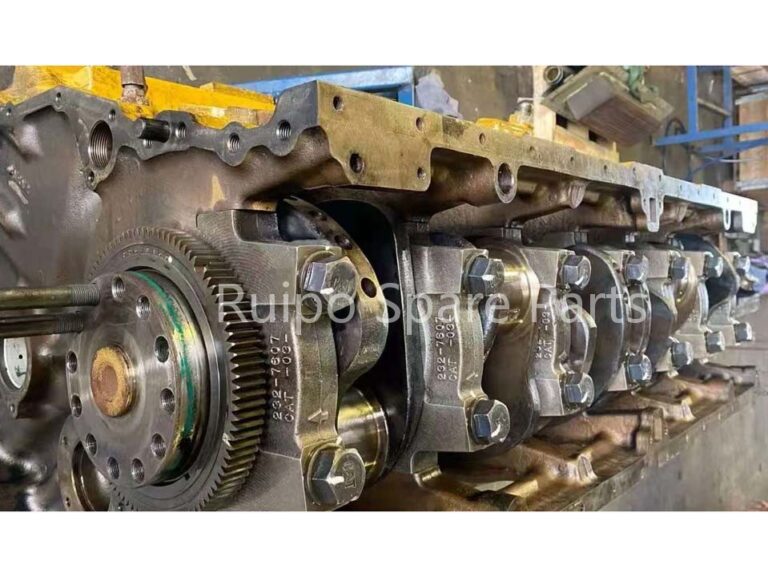
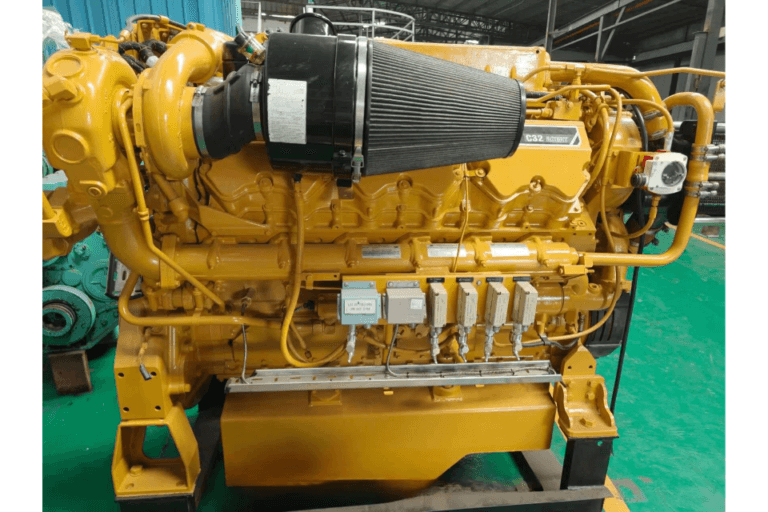
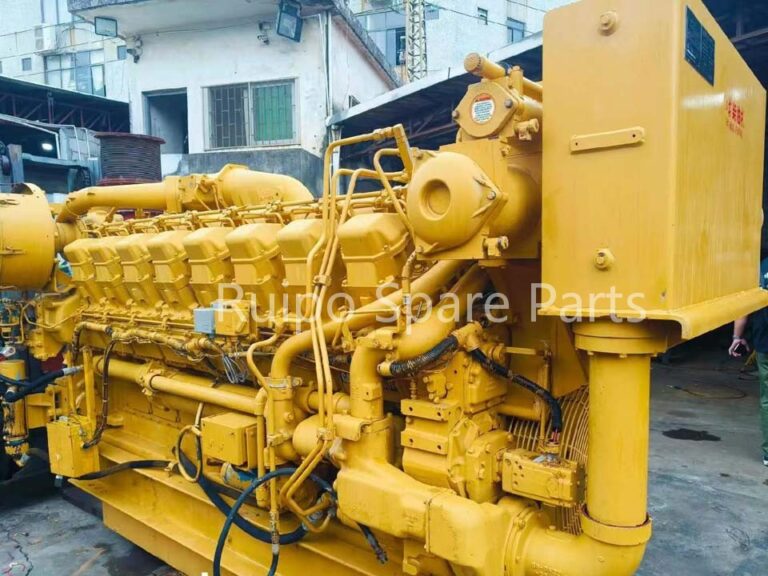
“Поставщик предоставил нам настоящее универсальное решение по запчастям. Их команда подобрала нужные запчасти Caterpillar, Perkins и фильтры для нашего оборудования, а поддержка была быстрой и профессиональной от запроса до поставки”.”
Менеджер по закупкам
Проекты запчастей для тяжелой техники
что о нас говорят другие
“Поставщик предоставил нам настоящее универсальное решение по запчастям. Их команда подобрала нужные запчасти Caterpillar, Perkins и фильтры для нашего оборудования, а поддержка была быстрой и профессиональной от запроса до поставки”.”
Срок службы дизельного двигателя в зависимости от режима нагрузки: легкий, прерывистый и тяжелый
A 12,000-hour diesel is not automatically an old engine.
And a 6,000-hour engine isn’t automatically young.
Оглавление
That sounds obvious until you watch used-equipment buyers compare two engines by staring at the hour meters, asking which one has fewer hours, and treating the answer as if it settles the question of remaining diesel engine life.
It doesn’t.
I would rather know how those hours were accumulated: average load factor, idle percentage, number of starts, fuel burned, time at rated power, coolant and oil temperatures, overload events, maintenance history, and whether the machine spent its life pulling steadily or repeatedly going cold-hot-cold.
Почему?
Because an engine doesn’t experience an “hour.” It experiences combustion pressure, temperature, speed, lubrication conditions, contamination, vibration, starts, stops, and load transitions.
That’s the real clock.
Diesel Engine Life Is a Workload Question, Not Just an Hours Question
The industry loves hour meters because they’re easy.
But easy isn’t necessarily useful.
Caterpillar’s own operating guidance makes an important distinction: engine load factor represents loading relative to maximum capability, and real machines rarely stay at 100% load continuously. Idle periods, unloaded travel, downhill operation, maneuvering, and part-throttle work all reduce average load factor.
In practical terms, a diesel engine load profile answers a better question than “How many hours?”
It asks:
What was the engine actually doing during those hours?
Consider three hypothetical 10,000-hour engines:
Operating profile
Typical operating behavior
Main lifecycle concern
What 10,000 hours really means
Light duty
Low average load, considerable idle time
Underloading, deposits, low exhaust temperature
Potentially low mechanical loading, but not automatically healthy
Intermittent duty
Repeated load changes, starts and thermal cycles
Bearings, thermal cycling, transient loading
Hours alone can hide a hard working history
Severe duty
Long periods of high torque/load
High cylinder pressure, heat rejection, fuel consumption
Much more work may have been accumulated per hour
Continuous properly rated duty
Stable temperature and sustained designed load
Normal cumulative wear
Potentially predictable if rating and maintenance are correct
These categories are deliberately broad. A 35% load factor should not be treated as a universal boundary between “light” and “intermittent” operation across every engine family.
Application matters.
Rating matters too.
The Number Buyers Should Ask For: Load Factor
Load factor is one of the most useful numbers in a used diesel inspection, yet it’s routinely ignored.
Caterpillar describes load factor essentially as the average demand placed on an engine. Its technical material also shows that the value can be derived from actual fuel consumption relative to the amount of fuel the engine could consume at its rated output during the same period.
That gives us a simplified concept:
Load Factor ≈ Actual Work Demand ÷ Maximum Available Work Demand
Don’t confuse that with throttle position.
They’re not the same thing.
For certain Caterpillar equipment applications, its Performance Handbook has historically grouped engine load factors into ranges such as 35–50%, 50–65%, and 65–80%; another application section uses 20–40%, 40–60%, and 60–80%. That variation itself proves the point: there is no honest universal load-factor table for every diesel engine and machine.
The machine’s job determines the meaning.
Light Duty: Easy Work Can Still Create Ugly Problems
Here’s where conventional thinking gets shaky.
Lower load generally means lower cylinder pressure and lower mechanical stress. Fine.
But “low load” and “good operating environment” are not synonyms.
A diesel that spends thousands of hours idling or doing very short work cycles may struggle to remain in the temperature range its combustion and aftertreatment systems were designed around.
A 2024 study involving researchers at Universiti Teknologi PETRONAS and Addis Ababa Science and Technology University specifically examined diesel idling, fuel waste, emissions and heat dissipation. The researchers characterized stationary idling as inefficient fuel consumption rather than useful productive operation.
Older EPA-reviewed experimental work is also revealing: increasing idle speed from 600 to 1,100 rpm increased fuel consumption and CO₂ emissions by more than 150% in the tested conditions. :chatgpt-content-reference{index=”4″}
So don’t tell me an engine had an “easy life” merely because it idled a lot.
Easy doing what?
The hour meter may have accumulated 3,000 hours while the crankshaft was turning, oil was circulating, accessories were operating and fuel was burning — without 3,000 hours of productive work.
That distinction matters when assessing diesel engine life expectancy.
Intermittent Duty: Starts and Load Cycles Hide Behind the Hour Meter
Now take an excavator.
Dig.
Swing.
Dump.
Idle.
Travel.
Dig again.
The engine may repeatedly move from relatively low demand toward high demand instead of sitting at one stable operating point.
This is where the diesel engine duty cycle becomes more informative than average load alone.
Suppose two engines both average 45% load.
Engine A spends most of its operating life close to 45%.
Engine B alternates repeatedly between low load and near-rated output.
Same mathematical average.
Different life.
That distinction isn’t theoretical. Caterpillar maintenance information for its C175-16 locomotive engine explicitly considers not just operating hours but fuel consumption, load factor, load cycles and total engine starts when determining overhaul requirements. Its guidance also notes that engines accumulating high numbers of starts may experience accelerated wear involving components such as main bearings and camshaft lobes.
That’s exactly why I wouldn’t buy a high-hour industrial diesel based on the dashboard alone.
Severe Duty Changes the Diesel Engine Overhaul Equation
Now we get to the expensive end of the spectrum.
A severe duty diesel engine may spend extended periods operating under high load, high ambient temperature, heavy dust exposure, steep grades, overloaded hydraulic demand or other conditions that push thermal and mechanical systems harder.
Cylinder pressure rises with load.
Fuel burned per hour rises.
Heat rejection rises.
Turbocharger duty becomes harder.
Cooling-system performance matters more.
Oil temperature matters more.
Small maintenance deficiencies suddenly aren’t small anymore.
And this is where actual manufacturer overhaul information gets interesting.
Caterpillar maintenance information for C27 and C32 industrial engines says fuel consumption can provide a more accurate basis for maintenance intervals because it corresponds more closely with engine load. For an approximately 40% load factor, published figures show a C27 top-end overhaul reference of 9,000 service hours / 605,670 L (160,000 US gal) and a major-overhaul reference of 18,000 hours / 1,211,330 L (320,000 US gal). The C32 figures shown for the same approximately 40% load-factor assumption are 662,450 L (175,000 US gal) и 1,324,890 L (350,000 US gal) respectively.
Those aren’t universal overhaul promises. They are model- and application-specific reference values.
But look at what Caterpillar is measuring.
Fuel.
Load.
Hours.
Not hours alone.
A Real Example: Load Factor Can Move the Overhaul Window by Thousands of Hours
The C175-16 locomotive data make the relationship even harder to ignore.
Published maintenance guidance gives these reference overhaul figures:
Average load factor
Reference service hours
Below 25%
24,000 h
25–30%
21,000 h
30–50%
18,500 h
Above 40%*
16,000 h
*The manufacturer’s table contains overlapping load-factor notation, so these figures should be interpreted using the engine-specific Caterpillar documentation rather than generalized to another model. :chatgpt-content-reference{index=”7″}
Look at the endpoints.
24,000 versus 16,000 hours.
That’s an 8,000-hour difference in the published reference schedule.
Same engine family.
Different operating severity.
This is why answering “How long does a diesel engine last?” with a single number is usually bad analysis.
How Does Engine Load Affect Diesel Engine Life?
Engine load affects diesel engine life by changing combustion pressure, component temperatures, fuel burned, lubrication demand and the cumulative mechanical and thermal stress imposed on pistons, liners, bearings, valves, turbochargers and cooling-system components.
But there’s a trap here.
More load does не automatically equal bad operation.
A diesel engine designed and rated for continuous duty is supposed to work.
Caterpillar’s discussion of generator-set ratings notes that components are generally developed around expected engine life or time-to-overhaul under the intended rating. It also warns that operation significantly above a continuous rating for extended periods can accelerate wear, while excessive underloading can create problems of its own.
That’s a much better mental model:
Correct load is good. Excessive load is expensive. Chronic underload isn’t free.
For example, Caterpillar’s historical industrial rating definitions distinguish continuous operation from cyclic and intermittent service. One published guide describes an A/continuous rating as allowing rated load and speed up to 100% of the time, while intermittent categories progressively restrict allowable time at maximum horsepower.
So asking whether “80% load is too high” without identifying the engine rating is almost meaningless.
Eighty percent of what rating?
For how long?
At what ambient temperature?
At what altitude?
That’s the engineering question.
Four Operating Histories I Would Check Before Buying
When we’re evaluating a used diesel, I want four records before I get excited about low hours.
1. Total Fuel Burn
Fuel burned is essentially a rough lifetime-work counter.
Not perfect. Still extremely useful.
An engine accumulating 10,000 hours at modest average load may have burned dramatically less fuel — and therefore produced less cumulative power — than another 10,000-hour engine living close to its rated output.
Caterpillar’s C27/C32 overhaul methodology explicitly demonstrates why fuel consumption can be more informative than service hours alone.
2. Idle Percentage
High idle hours change the interpretation of total hours.
If a machine displays:
12,000 total hours
but ECM history shows:
4,000 idle hours
I don’t evaluate it exactly like another 12,000-hour engine with only 700 idle hours.
Neither number alone proves which engine is healthier.
That’s important.
The second engine may have performed far more useful work, while the first may have accumulated undesirable low-temperature operating time. Maintenance records, oil analysis and physical inspection decide what those numbers actually mean.
3. Starts and Thermal Cycles
Cold starts deserve attention.
Oil doesn’t instantly establish the same operating conditions that exist after the engine reaches normal temperature, and repeated heating and cooling cycles impose a different stress pattern from long steady-state operation.
Manufacturer guidance reinforces the point: Caterpillar’s C175-16 maintenance information specifically treats engine starts as an overhaul indicator and calls for additional guidance when starts exceed a stated threshold in that application.
4. Sensor and ECM History
Electronic data can expose a machine’s past in ways an hour meter can’t.
Engine speed, coolant temperature, pressure events, fault codes, derates and other recorded parameters can help reconstruct how a machine actually worked.
And bad signals matter too. A failed or inaccurate sensor can distort control and diagnostic information, which is why parts such as the 579-1486 sensor assembly for CAT C4.4 applications should be considered part of the broader engine-management system rather than dismissed as insignificant electrical hardware.
Heavy Duty Diesel Engine Lifespan: Stop Looking for One Magic Number
Buyers frequently search for heavy duty diesel engine lifespan expecting something like:
15,000 hours.
I don’t like that answer.
It looks precise while hiding nearly everything that determines whether it applies.
A C4.4 in an excavator, a C18 generator engine, a C32 industrial engine and a C175 locomotive engine aren’t interchangeable lifecycle datasets.
Neither are their jobs.
Caterpillar’s marine rating documentation makes this obvious. Its historical rating structure associates different load factors, time at rated speed and annual operating hours with different applications. One heavy-duty marine rating, for example, describes roughly 40–80% load factor and approximately 3,000–5,000 operating hours per year, while an intermittent-duty rating allows a much smaller proportion of time at rated speed.
That’s why fleet history beats internet averages.
Every time.
A Better Way to Estimate Remaining Diesel Engine Life
If I were inspecting a high-hour engine for purchase, I’d build the lifecycle picture in roughly this order:
Suppose the seller claims “light duty,” but ECM history shows high lifetime fuel consumption and frequent high-load events.
That’s a problem.
Suppose an 11,000-hour engine has documented scheduled maintenance, stable oil consumption, clean oil-analysis trends, normal blow-by, controlled coolant temperatures and a moderate lifetime load factor.
That’s a completely different proposition.
The best evidence stacks.
It doesn’t depend on one number.
Even something as ordinary as mounting hardware can matter in severe vibration environments; the CAT 8T-4984 clamp is a reminder that hoses, harnesses, clamps and sensor mounting deserve inspection alongside major engine components when equipment has spent years in rough-duty applications.
What Fleet Buyers Should Record From 2026 Forward
Telematics has made “we don’t know how it was operated” a weaker excuse than it used to be.
EPA’s heavy-duty engine compliance program itself maintains manufacturer-run in-use testing datasets, illustrating how modern engine assessment increasingly depends on operating data rather than static specifications alone.
For fleet owners, I would preserve at least:
total engine hours and idle hours
lifetime fuel consumption
average load factor
load histogram, where available
engine starts
overheating events
overspeed events
oil consumption history
oil-analysis trends
coolant-analysis results
injector or fuel-system work
turbocharger replacement history
top-end and major rebuild records
ECM fault and derate history
That information has resale value.
A buyer can argue about whether 14,000 hours is “high.”
It’s much harder to argue with a documented operating history showing exactly how those 14,000 hours were accumulated.
Вопросы и ответы
What determines diesel engine life?
Diesel engine life is determined by the combined effect of load factor, duty cycle, operating temperature, fuel burned, engine starts, idle time, lubrication, contamination control, cooling-system condition and maintenance history rather than operating hours alone. Engine design and manufacturer rating establish the baseline, while actual operating conditions determine how aggressively that life is consumed.
That’s why two engines with identical hours can reach overhaul at very different points.
How does engine load affect diesel engine life?
Engine load affects diesel engine life by changing cylinder pressure, combustion temperature, fuel consumption, bearing loads and thermal stress; sustained operation beyond the manufacturer’s intended rating generally consumes engine life faster than operation within the correct rating and duty cycle. Chronic underloading can also create undesirable operating conditions.
So the objective isn’t “lowest possible load.”
It’s correct load for the rating.
How long does a diesel engine last under heavy load?
There is no universal hour figure for how long a diesel engine lasts under heavy load because overhaul timing depends on engine family, rating, fuel burned, load factor, ambient conditions, maintenance and duty cycle. Manufacturer-specific overhaul schedules should therefore replace generic internet lifespan estimates when evaluating a particular engine.
Caterpillar’s C175-16 data illustrate the magnitude: published reference intervals vary from 24,000 hours at the lowest listed load factor to 16,000 hours at the highest listed range. :chatgpt-content-reference{index=”14″}
Is idling better for diesel engine life than working under load?
Idling is not automatically better for diesel engine life because it reduces mechanical load while simultaneously accumulating hours, consuming fuel and potentially keeping combustion and exhaust temperatures below the conditions achieved during productive loaded operation. The effect depends heavily on engine design, idle duration, temperature, emissions equipment and subsequent operating cycle.
In other words: low stress isn’t the same thing as zero cost.
What is a diesel engine overhaul interval?
A diesel engine overhaul interval is the manufacturer- or fleet-established operating point at which major inspection and rebuilding work is planned, commonly based on service hours, fuel consumption, load factor, oil consumption, starts, load cycles and observed engine condition. It should be treated as an application-specific maintenance threshold rather than a universal expiration date.
Condition data should always sit beside the schedule.
Is a high-hour diesel engine necessarily worn out?
A high-hour diesel engine is not necessarily worn out because operating hours measure elapsed running time rather than the exact mechanical and thermal work accumulated during those hours. Load profile, fuel consumption, maintenance records, oil analysis, blow-by, compression, oil consumption and rebuild history provide stronger evidence of remaining condition.
That’s the difference between counting hours and evaluating an engine.
Turn Engine Hours Into an Operating History
Before buying a used engine, excavator, generator set or other high-hour machine, don’t ask only “How many hours?”
Ask for the ECM report. Ask for fuel burn. Check idle percentage. Review oil and coolant records. Look for overheating and derate history. Verify repairs. Compare the engine’s actual duty cycle with the rating it was designed to handle.
Then inspect the hardware.
If you’re sourcing Genuine & Original Caterpillar engine and equipment parts, RUIPO Spare Parts can help identify part numbers and match components to the relevant CAT engine or machine application. Send us the part number, engine model, machine model and serial number when available for a more accurate parts check.