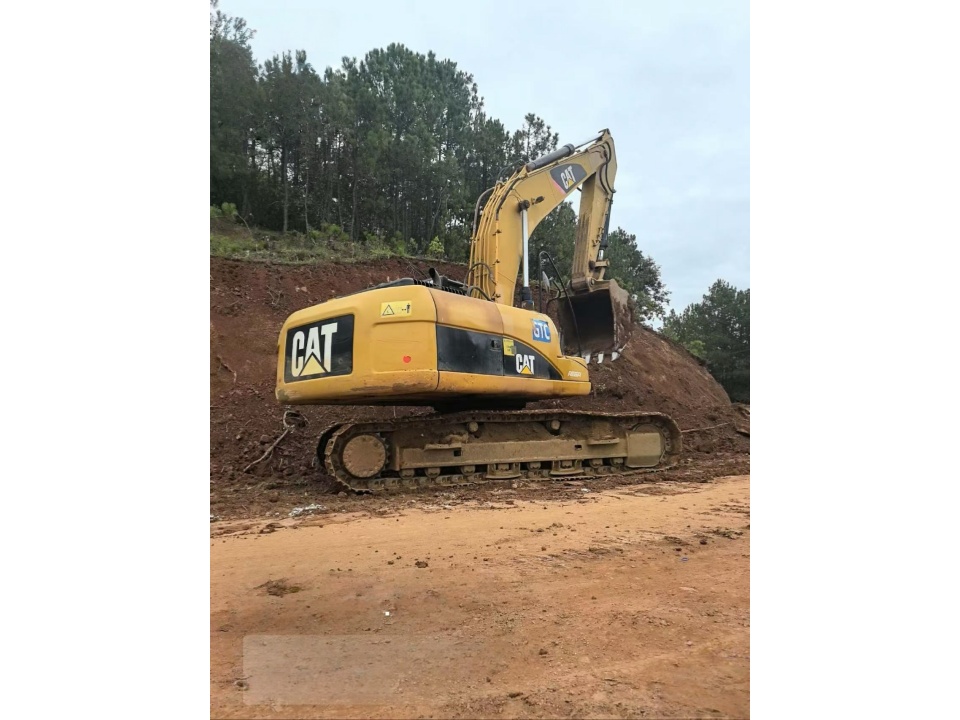
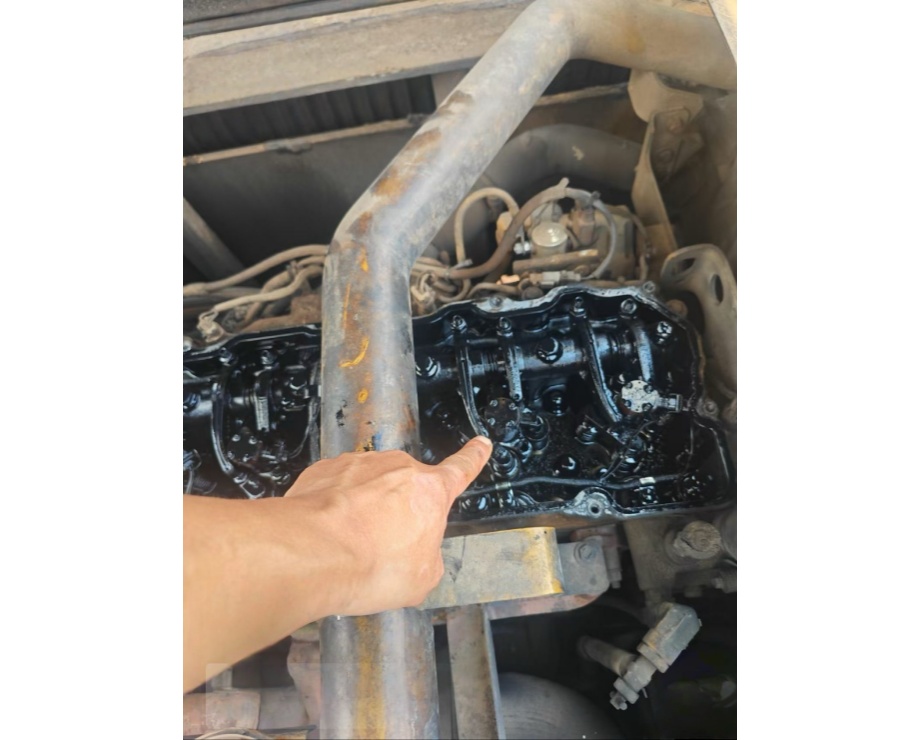
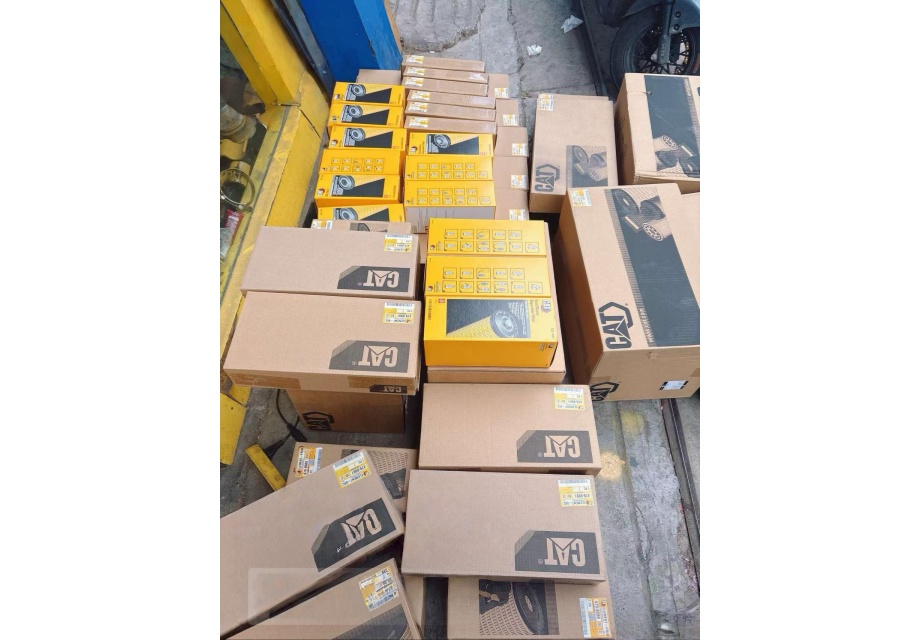
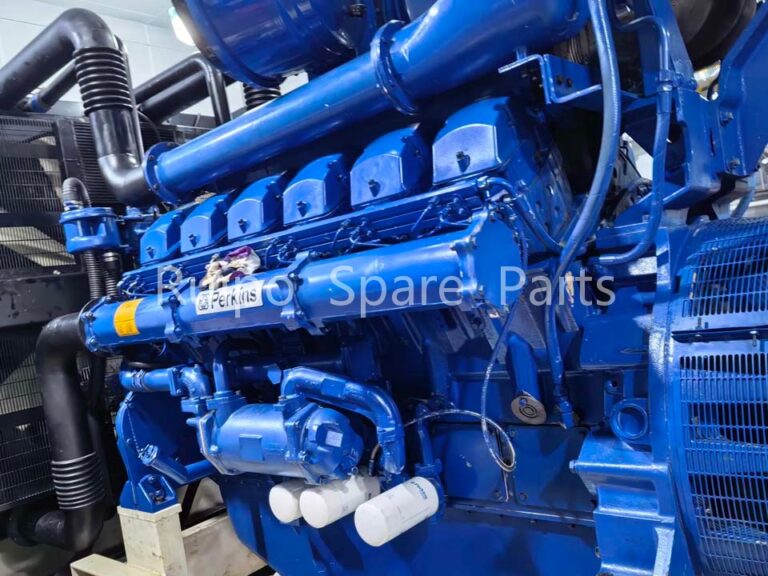
“Le fournisseur nous a offert une véritable solution unique en matière de pièces détachées. Son équipe a trouvé les pièces Caterpillar, Perkins et les filtres qui convenaient à notre équipement, et l'assistance est restée rapide et professionnelle, de la demande à la livraison.”
Responsable des achats
Projets de pièces détachées pour équipements lourds
ce que les autres disent de nous
“Le fournisseur nous a offert une véritable solution unique en matière de pièces détachées. Son équipe a trouvé les pièces Caterpillar, Perkins et les filtres qui convenaient à notre équipement, et l'assistance est restée rapide et professionnelle, de la demande à la livraison.”
Responsable des achats
Projets de pièces détachées pour équipements lourds
Seuils de remise à neuf des moteurs diesel selon le type d'équipement et le cycle d'utilisation
J'ai vu deux responsables de flotte se tenir à côté de moteurs affichant des relevés de compteur presque identiques et en parler comme s'ils avaient mené des vies identiques, alors même que l'un avait passé ses journées à tourner au ralenti à température stable tandis que l'autre avait avalé de la poussière de carrière, s'était surchauffé après son arrêt et avait dû faire face à une forte demande hydraulique dès le matin.
Table des matières
Mêmes horaires. Moteur différent.
C'est là le premier problème des discussions habituelles sur la remise à neuf des moteurs diesel. Quelqu'un demande : “ Combien d'heures ce moteur devrait-il tenir ? ” On sort alors un chiffre tiré d'un forum en ligne, d'un récit d'un concessionnaire ou d'un tableau d'entretien dont on ne se souvient qu'à moitié.
Dix mille.
Quinze mille.
Peut-être une vingtaine.
Ça a l'air bien rangé, n'est-ce pas ?
Voici la triste vérité : c'est souvent justement un chiffre bien rond qui fait capoter le budget. Un moteur diesel affichant 12 000 heures de fonctionnement dans un groupe électrogène de secours n’a pas nécessairement effectué un travail mécanique comparable à celui d’une pelleteuse ayant accumulé 12 000 heures de service et passé des années à alterner entre le ralenti, les charges de pivotement, la demande de pompage, la force d’arrachement et les arrêts à pleine température.
Le compteur enregistre le temps. C'est tout.
Pour prendre une décision judicieuse concernant la remise à neuf d'un moteur diesel, il faut tenir compte de la charge moyenne, de la consommation cumulative de carburant, du pourcentage de temps passé au ralenti, des démarrages à froid, de l'intrusion de poussière, de l'historique du liquide de refroidissement, de la consommation d'huile, des fuites de gaz de fuite, de la compression, de l'équilibre des injecteurs, des épisodes de surchauffe, de l'état du lubrifiant et du coût lié à l'indisponibilité de la machine au moment où on en a réellement besoin.
Si on fait abstraction de tout ça, la “ durée de vie d'un moteur diesel ” devient un sujet de conversation de comptoir, avec une facture à la clé.
Le compteur d'heures n'est pas un indicateur d'usure
Un contremaître m'a dit un jour que son moteur était “ jeune ” parce qu'il n'avait que 9 000 heures au compteur.
Peut-être.
Mais la machine avait travaillé sur un chantier chaud et abrasif, le boîtier de son filtre à air présentait des traces de saleté, et l'opérateur a admis que l'alerte de température s'était déclenchée “ à plusieurs reprises ”. Cette phrase —quelques fois—peut masquer un nombre surprenant de dommages au niveau des pistons, des chemises, des joints de culasse et du film d'huile.
Les heures-moteur mesurent la durée de fonctionnement. Elles ne permettent pas de mesurer directement la pression de combustion, le rejet de chaleur, l'exposition à la poussière, la quantité de carburant consommée, ni le nombre de fois où un moteur froid a été soumis à un effort intense avant que l'huile n'ait eu le temps de circuler correctement.
Cette distinction est importante.
L'inventaire californien des moteurs diesel hors route définit le facteur de charge comme la fraction moyenne de la puissance nominale utilisée pendant le fonctionnement d'un moteur. Les données relatives à ces équipements ont révélé des facteurs de charge compris entre 0,20 et 0,54, avec une moyenne globale de 0,38. Les données relatives aux pelles mécaniques sont toutefois plus intéressantes : les relevés de consommation de carburant et d’heures de fonctionnement de 170 pelles mécaniques ont indiqué un facteur de charge estimé à 49%, contre 39% dans le modèle précédent.
Dix points de pourcentage.
Ce n'est pas rien.
Cet écart est suffisamment important pour fausser la planification des révisions, les prévisions de consommation de carburant et les hypothèses relatives au renouvellement de la flotte, en particulier lorsqu'un tableur traite toutes les heures enregistrées de la même manière. Les chiffres sont disponibles dans Inventaire 2022 des émissions des véhicules diesel en circulation établi par le CARB.
Une méthode approximative pour normaliser les heures consiste à :
Heures équivalentes à pleine charge = heures de fonctionnement enregistrées × coefficient de charge moyen
Ainsi, une pelleteuse ayant totalisé 10 000 heures de service, avec un taux de charge moyen estimé à 0,49, a accumulé environ 4 900 heures équivalentes à pleine charge.
Utile ? Bien sûr.
Terminé ? Loin de là.
Ce calcul ne tient pas compte du fait que le filtre à air était peut-être mal installé. Il ne tient pas compte non plus du fait que le moteur tournait au ralenti pendant quatre heures à chaque poste, que le refroidisseur d'air de suralimentation était à moitié bouché, ou que le système de refroidissement avait été nettoyé au jet haute pression jusqu'à ce que les ailettes se plient comme du carton mouillé.
Il ne tient pas compte non plus des démarrages à froid, de la dilution du carburant, des fuites au niveau des injecteurs, du vitrification des cylindres, des thermostats défaillants, d'une composition inadaptée du liquide de refroidissement, du retard du turbo, d'une utilisation abusive par le conducteur et de l'accumulation de chaleur après l'arrêt du moteur.
Et c’est pourquoi je pense sincèrement que la consommation de carburant mérite davantage d’attention qu’on ne lui en accorde. La combustion n’est pas parfaite non plus, mais elle nous indique la quantité d’énergie que le moteur a réellement transformée. Une consommation plus élevée implique généralement une pression de combustion plus forte, davantage de chaleur, un déplacement plus important des segments, une charge plus importante sur les paliers et un travail accru du vilebrequin.
Cummins, par exemple, a publié une estimation de la durée de vie avant révision pouvant atteindre 625 000 gallons américains — soit environ 2,37 millions de litres de carburant — pour une configuration de locomotive QSK38, plutôt que de décrire cette durée uniquement en heures de fonctionnement.
Est-ce qu'on peut monter cette machine sur une pelleteuse de 20 tonnes ?
Bien sûr que non.
Mais cela met en évidence un fait que le secteur connaît déjà et que les services des achats ont souvent tendance à oublier : une planification rigoureuse de la durée de vie des moteurs tient parfois compte du débit de carburant et de la sévérité des conditions d'exploitation, car se fier uniquement au compteur d'heures n'est pas suffisant.
Planification pratique des fenêtres de remise en état par type d'équipement
Ces chiffres ne sont pas des limites absolues. Ce sont Fourchettes budgétaires B2B—le moment où je voudrais que les données d'inspection, les fonds, la planification des pièces détachées et les plans d'urgence en cas d'arrêt soient prêts avant que le moteur ne commence à prendre des décisions à notre place.
Ces fourchettes sont issues des déclarations publiées par les équipementiers concernant la durée de vie avant révision, des cas de remise à neuf sur le terrain, des études sur les facteurs de charge, des informations techniques, ainsi que des différences mécaniques évidentes entre les différentes applications des équipements.
Équipement ou application
Lancer l'examen formel des conditions
Fenêtre « Budget de reconstruction »
Qu'est-ce qui fait généralement avancer la date ?
Pelles mécaniques et engins de chantier
8 000 à 10 000 heures
10 000 à 15 000 heures
Ingestion de poussière, temps de ralenti prolongés, surchauffe, pics de charge hydraulique, filtration d'air insuffisante
Chargeuses, bulldozers et engins de transport hors route
10 000 à 12 000 heures
12 000 à 20 000 heures
Des températures de fonctionnement soutenues, une température ambiante élevée, des cycles de surcharge, de l'huile ou du liquide de refroidissement contaminés
Moteurs hors route à usage intensif
8 000 à 10 000 heures
Environ 12 000 heures ou prolongation en fonction de l'état de l'équipement
Facteur de charge élevé, environnements abrasifs, cycles thermiques répétés
Read the table carefully. It says “review” and “budget,” not “tear the engine apart the moment the hour meter rolls over.”
That difference is expensive.
Cummins states that its off-highway QSG12 may reach or exceed 12,000 hours before overhaul without a midlife overhaul. Caterpillar’s Verdalskalk quarry case described machine rebuilds commonly taking place near 15,000 hours, depending on condition. Cummins has also published material stating that standby generator engines can commonly exceed 30,000 hours between major overhauls.
Then you get into large commercial marine platforms, where certain published component or major-overhaul figures stretch toward 60,000 or even 96,000 hours.
Same fuel family.
Wildly different life.
Anybody selling one universal diesel engine rebuild interval across those applications is either oversimplifying the problem or trying to move a rebuild kit.
Seuils de remise à neuf des moteurs de pelles hydrauliques
Around 8,000 hours, I’d start a proper engine-condition file for an excavator—even if it starts clean, pulls well, and isn’t using enough oil to worry the operator.
Don’t order pistons yet.
Collect evidence.
Measure crankcase pressure under a repeatable load. Record oil added per 100 hours. Track coolant additions instead of relying on somebody saying, “It takes a little now and then.” Review loaded fuel rate, injector correction values, cylinder contribution, exhaust temperature spread, boost pressure, intake restriction, and at least three consecutive oil-analysis reports.
Why three?
Because one sample can be dirty. One can be taken after repair work. One can reflect a long drain interval, a short drain interval, a contaminated bottle, or an engine that spent the week idling.
A trend is harder to fool.
Between roughly 10,000 and 15,000 hours, the commercial discussion becomes sharper. Not because the engine is automatically finished, but because the cost of being wrong starts climbing.
A Cummins QSG12 is designed around a published 12,000-hour life-to-overhaul target. Caterpillar’s Norwegian quarry case described full-machine rebuilds commonly being performed around 15,000 hours, depending on condition. In that case, a non-certified rebuild cost roughly 35% to 40% of the price of a new machine, while another rebuilt Cat 988H was expected to gain another 6,000 to 7,000 operating hours.
That’s useful arithmetic.
Le 2023 Verdalskalk quarry rebuild case doesn’t prove that every excavator engine should be stripped at 15,000 hours. It does show why a planned rebuild can make sense when the frame, structure, application, and remaining machine value are still worth protecting.
But—and this mistake is made constantly—slow digging doesn’t automatically mean weak cylinders.
Suppose the engine reaches rated speed, the machine travels reasonably well, there’s no serious blow-by increase, and the oil samples look stable, yet the bucket feels lazy in hard material. That may be a pump, relief, control, leakage, or hydraulic-efficiency problem rather than an engine problem.
On applicable Caterpillar 834B and 836 machines, checking the hydraulic circuit and the condition of a CAT 5R4477 hydraulic pump for 834B and 836 wheel dozers may save a perfectly serviceable engine from being torn down.
I’ve seen that kind of misdiagnosis.
It’s painful.
The same applies to overheating. A mechanic sees the coolant temperature climbing under load, notices a little oil haze, and somebody jumps straight to liners or a head gasket. Slow down. Check the radiator core, debris between coolers, fan pitch, fan direction, fan speed, shroud gaps, belt condition, thermostat opening, water-pump flow, cap pressure, charge-air temperature, and coolant concentration.
Seuils de révision des moteurs de groupes électrogènes diesel
Generator engines confuse people because “generator duty” can mean almost anything.
There’s the standby unit sitting behind a hospital, data center, warehouse, telecom site, or water-treatment facility. It may run only a handful of hours during a normal year. Then there’s the prime-power set working a remote camp, mine, construction site, island grid, or industrial facility for thousands of hours annually.
Those engines may share a badge.
Their lives aren’t similar.
A standby generator can have low hours and still be unreliable. Moisture creeps into the crankcase and exhaust. Fuel ages. Batteries sulfate. Jacket-water heaters fail. Seals harden. Contacts corrode. Rodents discover wiring. Short, unloaded exercise runs create soot and condensation while allowing everybody to claim the unit was “tested.”
It spun.
That isn’t the same as proving it can accept load.
Cummins advises that infrequently used generator sets should be exercised under meaningful load. Its 2024 manual for one Onan diesel model recommends a two-hour monthly exercise at roughly half-rated power rather than a collection of short, nearly unloaded runs.
That makes mechanical sense. The engine reaches temperature, the exhaust heats properly, moisture can evaporate, and the operator has time to catch unstable temperature, smoke, voltage recovery, abnormal noise, fuel leakage, weak cranking, or poor load acceptance.
Prime-power engines get a different beating. They may accumulate 6,000 to 8,000 hours in one year, but they often run at stable temperatures for long periods—which engines generally prefer—while processing a massive volume of fuel.
For those sets, track liters per generated kWh, oil consumption, coolant chemistry, cylinder exhaust temperatures, injector balance, crankcase pressure, boost, and load-step response.
Don’t just write down hours.
An older but still useful Cummins reliability paper states that standby diesel engines can typically run for 30,000 hours or more between major overhauls. I’d treat that as evidence of possible engine capability, not a promise and certainly not an excuse to neglect testing.
A standby unit protecting a cold store, operating theatre, data hall, mine dewatering system, or municipal pump station should be rebuilt while the work can still be planned. Waiting for a dramatic symptom may feel financially conservative right up until the lights go out.
Then it’s panic buying.
Caterpillar has reported a case in which three Cat C32 generator sets supplied a ten-building medical campus for more than a month following a transformer failure. That example isn’t a diesel generator engine overhaul threshold, but it explains why reliability margins matter.
For nonessential rental equipment, you may tolerate more risk.
For medical power? No.
Seuils de révision des moteurs diesel marins
Marine diesel numbers can become nonsense very quickly.
A high-speed engine pushing a planing vessel, a medium-speed ferry engine, a harbor tug, an auxiliary generator, and a low-speed two-stroke main engine may all be described with the same broad phrase—marine diesel—but the mechanical similarities end surprisingly fast.
Bore size changes. Piston speed changes. Continuous rating changes. Fuel changes. Lubrication changes. Cooling-water treatment changes. The engine-room environment changes. Even the meaning of “overhaul” changes because large marine engines are often maintained component by component rather than treated as one sealed lump.
And then somebody asks for one universal marine diesel overhaul interval.
No chance.
En MAN Energy Solutions Service Letter SL2023-744, published in August 2023, MAN explains that condition-based maintenance strategies can extend guiding overhaul intervals. The same letter warns that waste-heat recovery systems, exhaust-gas bypass arrangements, EGR, SCR, heavy propeller operation, slow steaming, and fuel quality can alter combustion-chamber heat load and wear.
That’s the real stuff.
For one 70-bore ME-C methane configuration, the tables show 16,000-hour overhaul intervals for cylinder liners, piston rings, piston crowns, and piston skirts. A cylinder lubricator is shown at 32,000 hours, while selected components carry expected service lives reaching 60,000 or 96,000 hours.
Don’t drag those figures onto a yacht engine.
They belong to the specified engine architecture, rating, operating conditions, inspection regime, and manufacturer guidance.
But the numbers do prove something: “marine diesel engine overhaul” is not one event at one universal hour count. It can be a sequence of inspections, measurements, overhauls, and component renewals spread across tens of thousands of operating hours.
The fleet evidence gets more interesting. In March 2024, MAN reported that its 51/60DF engine population had passed 10 million cumulative operating hours. The report covered 310 engines in service, cited availability of up to 98%, and stated that field maintenance intervals had exceeded a planned 36,000-hour schedule.
Does that mean every marine engine should be pushed beyond 36,000 hours?
Non.
It means that good engineering, suitable loading, disciplined maintenance, correct fuel handling, cooling-water control, combustion balance, and proper inspection can support longer intervals than an unverified internet average would suggest.
Condition data earns extensions.
Optimism doesn’t.
Six indicateurs de reconstruction plus importants que le temps écoulé
The hour meter is still useful. I’m not throwing it away.
But when the hour count disagrees with physical evidence, I trust the physical evidence.
1. La consommation de pétrole est en hausse
A mechanic says the engine “uses oil.”
Fine. How much?
That question often produces a shrug, and a shrug isn’t data.
Record liters or quarts added per 100 hours. Better yet, compare oil added with fuel consumed or useful production. An excavator can be tracked by oil per 100 hours and fuel per cubic meter moved. A generator can be measured against generated kWh. A haul machine can be compared with tonnes moved.
The trend matters more than the first number.
An engine that has consumed a stable amount of oil for 4,000 hours may be less concerning than an engine whose consumption has doubled during the last 500 hours, even when the newer number still looks “acceptable” to somebody reading a generic chart.
Rings wear. Liners polish. Valve guides loosen. Turbo seals leak. Crankcase pressure rises. Oil gets pulled into places it shouldn’t be.
Sometimes it’s subtle.
Cummins associates ring and liner problems with increased oil consumption, blow-by, power loss, and aftertreatment damage. That last item is easy to overlook. Oil ash and combustion deposits don’t politely remain inside the base engine; they can move downstream and create another repair bill.
So don’t ask only, “Is it burning oil?”
Ask, “How fast is the consumption rate changing, under what load, and where is the oil going?”
2. Les fuites de gaz de combustion ont dépassé la limite spécifique au moteur
Blow-by is combustion gas leaking past the piston rings into the crankcase.
Every diesel has some.
That’s normal.
What isn’t normal is a steady increase in crankcase pressure under a controlled, repeatable load—particularly when it appears alongside rising oil consumption, low cylinder contribution, haze from the breather, seal leakage, or reduced power.
Caterpillar’s blow-by diagnostic equipment is used to evaluate ring wear, cylinder-wall damage, compression loss, and general engine condition. But the measured number has to be compared with service information for that engine model and test procedure.
Not somebody else’s engine.
Displacement matters. Speed matters. Load matters. Measurement units matter. Test temperature matters. Breather arrangement matters.
A six-liter engine and a 38-liter engine won’t share the same raw flow limit. Nor should they.
I’ve heard people diagnose a rebuild by removing an oil cap and watching it dance.
That’s a clue.
It isn’t a test report.
3. L'analyse de l'huile révèle une tendance, et non un chiffre alarmant
One high iron result can start an argument.
Three rising iron results start an investigation.
There’s a difference.
A single sample can be affected by poor sampling technique, recent repair work, an extended drain, fresh break-in wear, residue in the bottle, or contamination introduced while the sample was taken.
That’s why I want consecutive reports, sampled from the same point, at comparable intervals, with operating hours and oil-add quantities recorded.
Watch iron (Fe), copper (Cu), lead (Pb), aluminum (Al), chromium (Cr), silicon (Si), sodium (Na), and potassium (K). Then look at viscosity, oxidation, soot, fuel dilution, water, and evidence of glycol.
The relationships matter.
High silicon with rising iron may point toward dirt ingestion. Sodium and potassium, combined with water or glycol indicators, may suggest coolant entry. Copper and lead movement can indicate bearing distress, although cooler cores and other copper-containing components can complicate the picture.
Ethylene glycol—C₂H₆O₂—in engine oil isn’t a casual “check again next service” finding when bearing metals are moving and the coolant level keeps falling.
John Deere’s fluid-analysis material discusses early detection of wear metals, dirt, water, coolant, fuel, soot, additive depletion, viscosity change, and oxidation.
That’s how oil analysis should be used.
Not as a fortune cookie.
4. La consommation de carburant augmente tandis que la production diminue
A tired diesel often gets expensive before it gets dramatic.
The operator may not notice because the decline happens slowly. The machine still starts. It still moves. It still makes noise. But it needs more throttle to perform the same work, cycle times stretch, fuel use climbs, and the black-smoke complaint gets blamed on “heavy material.”
Measure it.
For an excavator, compare fuel burn with material moved or repeatable cycle performance. For a generator, track liters per kWh at controlled loads. For haul equipment, measure liters per tonne. For marine engines, review fuel consumption against power, vessel speed, propeller condition, weather, hull fouling, and engine load.
Yet don’t jump straight to rings.
A restricted air cleaner, charge-air leak, worn turbocharger, injector fault, timing issue, exhaust restriction, excessive aftertreatment backpressure, cooling problem, poor fuel, or weak hydraulic system can all make an engine look tired.
Here’s the ugly truth: a new set of liners won’t fix a plugged cooler stack.
It won’t repair a slipping fan drive.
And it definitely won’t restore a worn hydraulic pump.
5. L'équilibre des cylindres est en train de se dégrader
One weak cylinder can hide in a large engine for a long time.
The remaining cylinders pick up the work. Exhaust temperatures spread. Fuel corrections move. Smoke changes. The engine may feel slightly rough at one operating point and perfectly acceptable at another.
Then the fault grows.
Measure compression where the OEM procedure supports it. Review cylinder contribution, injector correction, peak firing pressure where available, and exhaust temperature under a steady, repeatable load.
One weak hole might point toward an injector, valve, seat, head, or localized cylinder problem.
Several weak cylinders—combined with rising blow-by, increased oil use, weak loaded power, and wear-metal trends—make an in-frame or full diesel engine overhaul far easier to justify.
But use the correct limits.
A 2024 Cummins service manual for one 1.5-liter IDI generator engine lists a minimum cylinder compression of 370 psi, or 2.55 MPa. That figure belongs to that engine and its specified procedure.
It is not “the minimum compression for a diesel.”
Engines don’t work like that.
6. Le problème de refroidissement revient sans cesse
An engine overheats once because a plastic bag blocks the radiator.
That’s one thing.
It overheats every time the machine works hard, coolant keeps disappearing, the fan sounds wrong, and the top tank temperature climbs faster each month?
Different story.
Repeated high-temperature operation attacks oil viscosity, piston-to-liner clearance, valve life, turbocharger durability, liner seals, head gaskets, and cylinder-head flatness. The warning light may go off after the machine cools, but the metallurgical damage doesn’t reverse itself out of politeness.
Pressure-test the cooling system. Check the cap. Measure radiator temperature drop. Confirm thermostat operation. Inspect water-pump flow, belt drive, fan speed, fan pitch, fan direction, shroud sealing, charge-air-cooler restriction, coolant concentration, freeze point, and the presence of combustion gas in the cooling system.
And clean the coolers properly.
Blasting a packed radiator from the wrong direction can drive debris deeper into the stack. Hammering soft fins with excessive pressure can reduce airflow while making the surface look clean from five feet away.
Seen it happen.
When the teardown is finally approved, don’t dismiss the small hardware. Reusing stretched, corroded, rounded, or incorrectly graded fasteners can compromise an otherwise careful overhaul.
Réparation de la partie supérieure, remise à neuf dans le châssis ou remplacement complet ?
Not every smoky, oil-using, low-power diesel needs a complete overhaul.
And not every engine that still starts deserves to keep running.
The correct scope sits somewhere between those two lazy conclusions.
Continuez à courir, mais mesurez vos performances plus souvent
Continue operating when loaded power remains acceptable, fuel consumption is stable, blow-by isn’t moving, oil use is predictable, coolant stays where it belongs, and oil-analysis trends remain flat.
But create stop conditions.
Write them down.
For example: rebuild planning begins if oil consumption rises by a defined percentage, crankcase pressure crosses the OEM limit, glycol appears in two confirmed oil samples, loaded fuel rate worsens beyond the agreed threshold, or one cylinder repeatedly fails the balance test.
“Keep an eye on it” is not a maintenance strategy.
It’s how problems disappear between shifts until the engine puts a connecting rod through the block.
Optez pour une révision complète
A top-end overhaul makes sense when the problem is concentrated in cylinder heads, valves, seats, guides, injectors, rocker gear, or the turbocharger while the liners, bearings, crankcase pressure, oil pressure, and bottom-end metal trends remain acceptable.
Generator engines with valve recession or unstable exhaust temperatures may fall into this group. So might a marine engine with injector leakage, one damaged head, or localized valve trouble.
This scope can save real money.
But only when the bottom end has been checked rather than ignored.
Choisissez une remise à neuf avec conservation du châssis
An in-frame rebuild becomes reasonable when pistons, rings, liners, rod bearings, and related power-cylinder components show clear wear but the engine block, crankshaft, installation, and main structure remain serviceable.
It avoids some removal, transport, and reinstallation cost. On large equipment, that matters.
Still, I’ve seen cheap in-frames become expensive very quickly because the work stopped at the obvious parts. Nobody checked counterbore condition. Nobody measured crank journals properly. The turbocharger went back on with questionable end play. The oil cooler wasn’t cleaned. The injectors were reused because they “looked okay.”
Then the fresh cylinders ate the old contamination.
False economy.
Optez pour une révision complète ou un remplacement du moteur
A complete overhaul—or replacement—makes more sense when the crankshaft, main-bearing structure, block, camshaft system, lubrication circuit, multiple cylinders, or major external systems show broad deterioration.
The same applies when parts availability is poor, the engine has an obsolete emissions configuration, the core is damaged, or the expected downtime of rebuilding is worth more than the difference in engine price.
If a planned diesel engine rebuild costs less than the risk-adjusted cost of continued operation, schedule it. If a replacement engine also reduces fuel use, improves emissions compliance, restores warranty protection, solves parts-supply problems, or cuts downtime, rebuilding the old core might not be the bargain it first appears to be.
Cheap isn’t always economical.
Trois constatations tirées de la pratique qu'il convient de retenir
The Caterpillar Verdalskalk case is useful because it deals with actual commercial decisions rather than theoretical engine life. The 2023 account described machine rebuilding commonly taking place near 15,000 hours, depending on condition, with one non-certified rebuild costing around 35% to 40% of a new machine.
Another rebuilt Cat 988H was expected to gain 6,000 to 7,000 additional hours.
That’s a business case.
It still isn’t a universal rebuild timer.
CARB’s off-road data gives us a different warning. Its overall equipment load factor was 38%, while the excavator group derived from fuel-and-hour data reached 49%.
Two hour meters can show the same number while the engines behind them have processed substantially different fuel volumes, cylinder pressures, heat loads, and work cycles.
The third example comes from MAN. Its March 2024 report covered 310 model 51/60DF engines that had exceeded 10 million combined operating hours, with availability reported at up to 98% and some field maintenance intervals moving beyond the planned 36,000-hour schedule.
That doesn’t tell us to delay maintenance.
It tells us that inspections, operating discipline, combustion balance, correct fluids, and reliable trend data can justify an extension. Without those things, “condition-based maintenance” is sometimes just a sophisticated phrase for hoping nothing breaks.
My opinion?
Fleet owners need to stop asking, “How long does a diesel engine last?”
Ask this instead:
How much verified life remains in this engine, at this load, in this environment, with this maintenance history—and what will one unplanned failure cost the business?
That question isn’t as neat.
It’s much more useful.
FAQ
Quand faut-il réviser un moteur diesel ?
A diesel engine should be rebuilt when repeated condition data shows progressive internal wear—such as rising oil consumption, excessive blow-by, uneven compression, worsening fuel efficiency, abnormal wear metals, coolant contamination, or falling loaded power—that can’t be corrected economically through injector, turbocharger, cooling-system, hydraulic, or top-end repairs.
The hour meter should start the investigation, not end it. Test the engine under a repeatable load, compare the measurements with model-specific OEM limits, review multiple oil samples, and calculate the cost of continued operation before choosing an in-frame or complete diesel engine overhaul.
Quelle est la fréquence habituelle de révision d'un moteur diesel ?
A typical diesel engine rebuild interval may fall near 10,000–15,000 hours for hard-worked construction engines and 20,000–30,000 hours or more for well-maintained generator engines, while selected commercial marine engines or individual components may have published overhaul and expected-life figures ranging from approximately 36,000 to 96,000 hours.
Those numbers are planning ranges—not universal deadlines. Load factor, cumulative fuel burn, idle time, dust, fuel quality, overheating, cooling performance, oil condition, operating rating, and maintenance discipline can move the real rebuild point thousands of hours earlier or later.
Au bout de combien d'heures faut-il réviser le moteur d'une pelleteuse ?
An excavator engine should usually enter structured condition assessment at approximately 8,000–10,000 hours, while many fleets begin budgeting a possible rebuild between 10,000 and 15,000 hours; clean, correctly maintained engines may run longer, whereas dust entry, overheating, fuel dilution, high-load cycles, or poor filtration can force earlier intervention.
Don’t authorize an excavator engine rebuild on hours alone. Check loaded blow-by, oil consumption, compression or cylinder contribution, boost, injector balance, coolant history, air-filter sealing, oil-analysis trends, productive fuel use, and hydraulic performance before deciding that the base engine is responsible.
À quel moment un groupe électrogène diesel doit-il faire l'objet d'une révision complète ?
A diesel generator needs an overhaul when controlled load testing and condition trends show declining reliability, rather than merely when the engine reaches a generic hour figure; prime-power units may be budgeted near 20,000–30,000 hours, while low-hour standby units are often governed by calendar aging, corrosion, exercise quality, fuel condition, and starting-system reliability.
Track crankcase pressure, exhaust-temperature balance, fuel consumption per kWh, oil and coolant condition, starting time, smoke, frequency recovery, voltage stability, and load acceptance. A short unloaded monthly run doesn’t prove that the engine can carry its rated emergency load.
À quelle fréquence faut-il réviser un moteur diesel marin ?
A marine diesel engine should be overhauled according to its engine-family component schedule and verified operating condition, with many inspection or overhaul events occurring between approximately 16,000 and 36,000 hours, while selected commercial-engine components or major-overhaul programs may carry published figures extending toward 60,000 or 96,000 hours.
Fuel sulfur, lubricant feed rate, propeller loading, slow steaming, EGR, SCR, combustion balance, cooling-water chemistry, liner measurements, ring condition, scavenge inspections, bearing data, and the manufacturer’s service letters all affect the real interval. Vessel class and model-specific documentation outrank generic online averages.
Préparez le budget de remise à neuf avant que le constructeur de moteurs ne le fasse à votre place
Before approving—or postponing—the next diesel engine rebuild, put the evidence on one sheet.
Include the engine model and serial number, equipment application, total hours, annual utilization, estimated load factor, lifetime or recent fuel consumption, oil added per 100 hours, the last three oil-analysis reports, blow-by measurements, compression or cylinder-balance results, loaded fuel rate, coolant history, overheating events, and the financial cost of one day of downtime.
Then set three points:
The next inspection.
The planned overhaul window.
The absolute stop condition.
Don’t leave those decisions buried in somebody’s head. Operators change. Supervisors move. Maintenance records vanish. The engine keeps wearing anyway.
Plan the work while the engine is still a rebuildable core—before one worn ring scores a liner, one coolant leak damages the bearings, or a neglected temperature problem turns scheduled maintenance into a crane, a recovery truck, and a very uncomfortable meeting.